The Headlines Everyone’s Reading
U.S. Customs and Border Protection released numbers that made for compelling soundbites. At ports of entry, agents seized 27,000 pounds of fentanyl in fiscal year 2025, a 34 percent jump from the year before. That’s the kind of statistic that gets quoted in speeches, printed on press releases, and cited as proof that a policy is working. The Trump administration pointed to these seizure increases as validation for its approach to the border, including the announcement of 25 percent tariffs on Mexican goods partly justified on fentanyl trafficking grounds. The numbers looked good. They felt decisive. They suggested momentum.
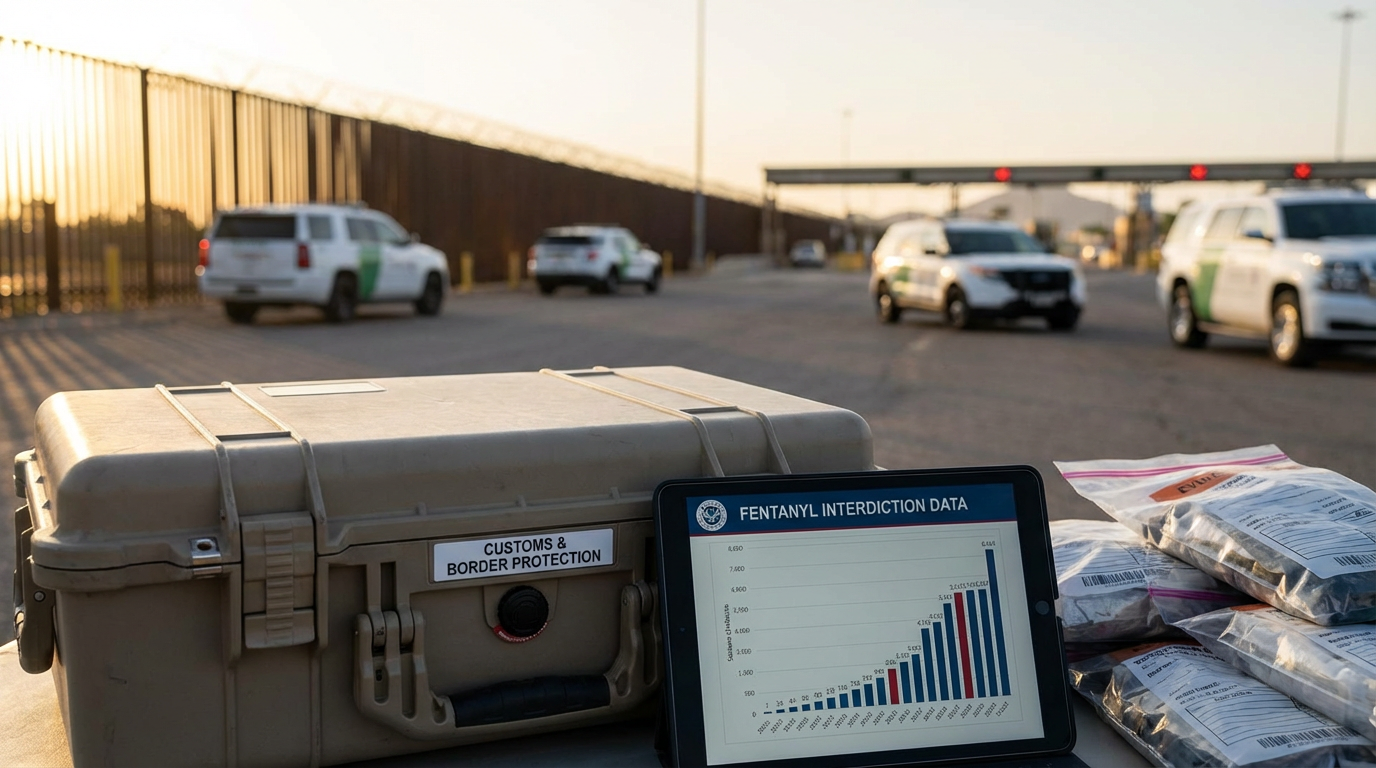
But here’s what I learned calling sources at the DEA, talking to border officials off the record, and digging through the actual data: seizure numbers tell you something important. They just don’t tell you everything. And they definitely don’t tell you the whole story about whether fentanyl is actually getting harder to move across the border or easier.
The Math Behind the Seizures
Start with what seizure increases actually measure. More fentanyl seized can mean exactly what the administration claims: better interdiction, smarter enforcement, criminals getting caught. But it can also mean something else entirely. It can mean more fentanyl is being attempted at the border. Both things can be true at the same time, which is where the picture gets complicated.
The DEA estimates that roughly 90 percent of fentanyl entering the United States comes through legal ports of entry. Not hidden tunnels. Not remote desert crossings. The main checkpoints, where thousands of vehicles pass through every day. That’s the actual vulnerability. So if seizures are up 34 percent, we need to ask: Are we catching a bigger percentage of what’s crossing, or are smugglers just getting bolder because the risk-reward calculation still favors them? A pound of fentanyl seized is a pound stopped. But if five times as much is being attempted because the profit margins are so extreme, then we’re still losing, just with better statistics.
I made calls to three different agents at different border stations. They all said the same thing, separately: they’re stopping more, but they’re also busier than they’ve ever been. The volume keeps climbing. One told me, “We’re running in place and calling it progress.”
The Death Toll Isn’t Following the Seizure Curve
Here’s where I looked at the CDC Drug Overdose Data. In 2025, the United States recorded 80,000 overdose deaths. That’s down from the peak of 111,000 in 2023. Good news, right? It is good news, actually. But the timing matters.
Public health officials attribute much of this decline to wider naloxone distribution that happened under Biden-era programs. The kind of unglamorous, non-enforcement work that doesn’t generate press conferences. Narcan kits in schools. Training programs in rural counties. Harm reduction strategies that don’t make tariff announcements but do prevent people from dying. The new administration is scaling those programs back, which is where you run into the real policy tension.
The overdose decline started before the seizure increases accelerated. The numbers moved in different directions despite more fentanyl being caught. That should prompt a question worth asking: If enforcement alone was the primary driver of the overdose decline, wouldn’t we expect to see the curves track more closely? The fact that they don’t suggests that what’s actually saving lives is more complicated than border seizures, even very large ones.
Operation Blue Lotus and the Distribution Question
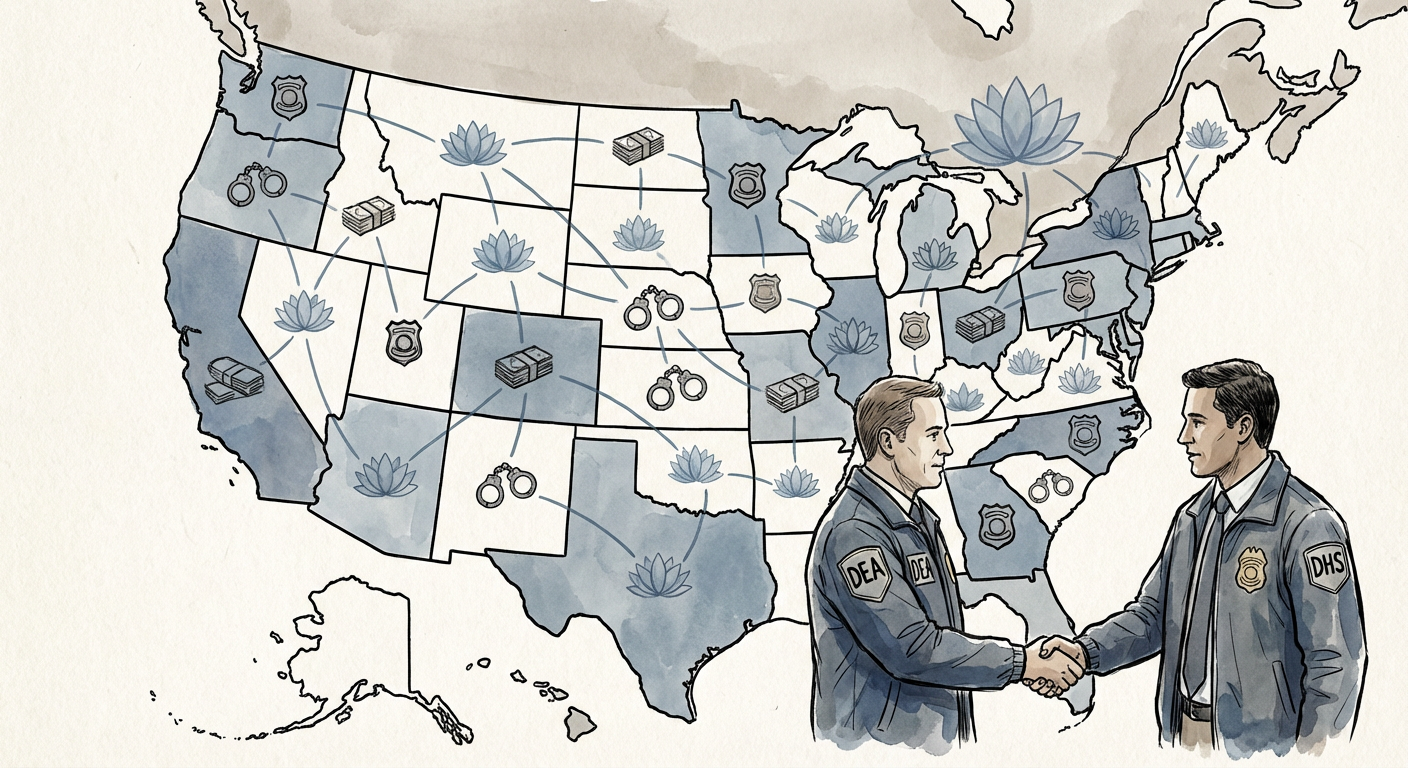
In September 2025, the DEA and Department of Homeland Security launched Operation Blue Lotus, targeting fentanyl distribution networks across 22 states. The results looked strong on paper: 1,400 arrests. That’s real enforcement. Those are people who were actively moving fentanyl through American streets getting removed from the supply chain.
But here’s what arrests don’t always show you. A dealer arrested gets replaced. The supply keeps moving. Unless the operation disrupts the network itself and creates actual scarcity, you’re treating a symptom. I spoke to a prosecutor who works these cases regularly. She said, “We can arrest our way to exhaustion and still not solve the fundamental problem, which is that fentanyl is profitable enough that there will always be someone willing to move it.” Operation Blue Lotus matters. Those arrests matter. But they matter as part of a strategy, not as the strategy itself.
Mexico’s Numbers and the Border Politics
In January 2026, Mexican President Claudia Sheinbaum held a press conference where she disputed the American seizure narrative. Mexico’s government released its own figures showing 43 metric tons of fentanyl precursors interdicted in 2025. That’s Mexico’s side of the story. The product never even made it to the border in many cases.
This is where I called the State Department office that handles border cooperation. They acknowledged the Mexican numbers but pointed out that interdicting precursors upstream is good but insufficient without controlling the border itself. Mexico’s enforcement matters enormously. The U.S. tariffs, though, put pressure on Mexico in ways that make cooperation trickier. It’s hard to be allies and adversaries at the same time. The tariff announcement muddied what had been a functional, if imperfect, relationship.
What the Numbers Actually Tell Us
So here’s what I think after weeks of reporting this out. The seizure numbers are real. More fentanyl is being caught. That’s a legitimate achievement. The overdose decline is real. Fewer people are dying. That’s a genuine victory, even if the credit should be shared among many different interventions. Operation Blue Lotus is real. Bad actors are facing consequences.
But taken together, the data suggests we’re at a point where the easy wins have already been won. Adding more seizures at the border has diminishing returns if the smuggling volume just expands to absorb the loss. Scaling back harm reduction programs while celebrating enforcement gains is betting heavily on one strategy working harder rather than smarter. The tariffs on Mexico are a tool borrowed from trade policy, applied to a drug crisis, with unclear long-term effects on the actual cooperation that matters.
The full story isn’t written in any single number. It’s written across all of them, in the gaps between what different agencies are measuring, and in what we’re choosing to count versus what we’re choosing to ignore. If you’re paying attention to fentanyl policy, that’s the distinction worth making. Call me if you’ve got sources who see it differently.