The Deal That Sounded Different
Back in January 2025, there was genuine relief in certain corners of the world. Qatar, Egypt, and the United States had brokered what looked like an actual ceasefire agreement. Not a temporary halt. Not a pause while everyone caught their breath. A three-phase framework that was supposed to chart a course toward permanent peace. Phase One would see hostages and detainees released. Phase Two would be where the real work happened: negotiating the terms of a permanent end to the conflict. Phase Three would handle reconstruction and guarantees. It sounded methodical. It sounded possible.

I’ve covered enough municipal negotiations to know that the structure of a deal matters less than what people actually intend to do with it. Structure is just the skeleton. Intention is the muscle. What happened over the next fourteen months would prove that lesson in the harshest possible way.
The Stalling Pattern
Phase Two negotiations have collapsed or stalled at least three separate times since spring 2025. Each time, mediators would shuttle between capitals. Each time, Egyptian and Qatari diplomats would speak carefully about “fundamental gaps” between Israeli and Hamas positions. The language was diplomatic code for something more basic: the two sides still wanted fundamentally different outcomes. Israel wanted security guarantees and the right to resume military operations if threatened. Hamas wanted permanent borders, refugee rights, and an end to Israeli military presence. These weren’t minor disagreements. They were the opposite of minor.
What struck me, reporting on this from afar, was how the international framework kept pretending the framework could work. Diplomats don’t like admitting that deals are dead. They prefer to call them “paused” or “in a delicate phase.” The language itself becomes a way of avoiding the harder conversation: that fundamental gaps exist because the parties genuinely cannot reconcile their core demands. I learned this covering city council meetings where two sides would talk past each other for months before anyone admitted they wanted different things entirely.
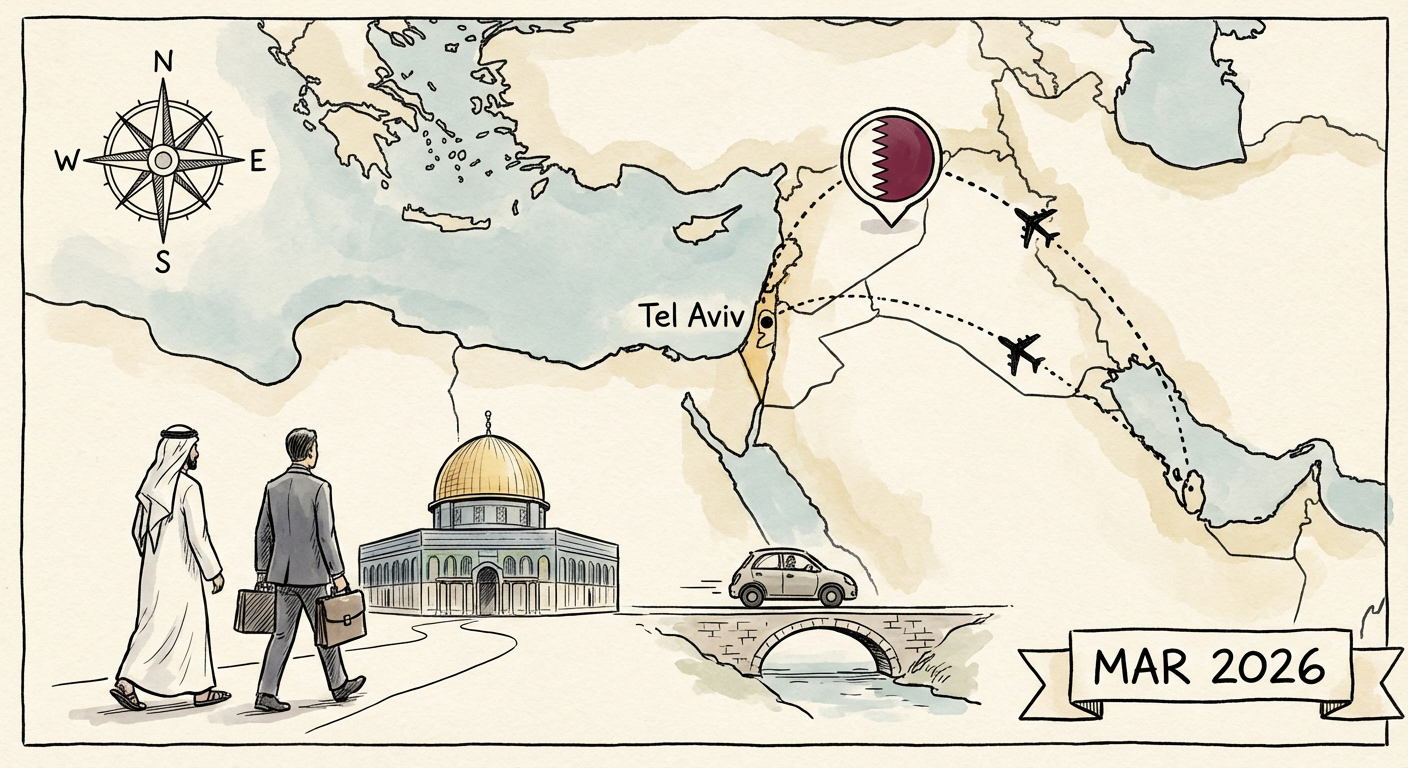
By March 2026, Qatar’s Foreign Ministry acknowledged it was resuming shuttle diplomacy after a six-week breakdown. This was the fourth visit by Qatari envoys to Tel Aviv since the January ceasefire. Each trip represented another attempt to find compromise in spaces where compromise seemed impossible. The rhythm had become predictable. Talks would begin with guarded optimism. Within weeks, the fundamental gaps would resurface. Mediators would declare a timeout. Then the cycle would repeat.
The Human Cost of Stalling
While diplomats shuttled between capitals, the numbers kept growing. Gaza’s Health Ministry recorded over 48,000 Palestinian deaths since October 7, 2023. The UN General Assembly had cited these figures repeatedly through early 2026. That’s not a statistical footnote. That’s nearly 50,000 people. Parents who didn’t wake up. Children who never made it to school. Medical staff who ran out of supplies and then ran out of options.
The humanitarian situation was fracturing alongside the negotiations. You can check UN OCHA Gaza Humanitarian Updates for the latest assessments, but the core reality remained constant: resources were scarce, displacement was ongoing, and every week of stalled negotiations meant another week where reconstruction wasn’t happening. Hospitals still weren’t fully operational. Water systems were still compromised. Schools were still not reopening at scale. The ceasefire had stopped active combat, but it hadn’t actually started the process of rebuilding. Phase Two was supposed to bridge that gap. Phase Two wasn’t happening.
Where the Pressure Points Emerged
In February 2026, the United States withheld $95 million in military aid to Israel as diplomatic leverage during Phase Two negotiations. According to State Department officials cited by Reuters Middle East Coverage, this was meant to signal that Washington was serious about pushing for a permanent agreement. It was also a tacit admission that the normal channels weren’t working. When a mediating power starts withholding military aid, you know the diplomatic playbook has run out of its usual pages.
This move split reactions along predictable lines. Some saw it as necessary pressure. Others saw it as misguided interference. What it actually represented was exhaustion. The administration had tried quiet diplomacy, public statements, summits, working groups, and back-channel conversations. When none of that moved the needle, it reached for the one lever that international relations teaches you to pull: economic and military consequences.
The problem with that lever is that it assumes the other side cares more about the incentive than about their core position. That’s often not true. People and governments in entrenched positions rarely reverse course because of aid cuts. They find workarounds. They accept the loss as the price of staying firm. This is what I’ve seen in local disputes where one party loses funding and just becomes more committed to their position out of sheer stubbornness.
What This Actually Means
The Gaza ceasefire of January 2025 was real in one sense: fighting did decrease substantially. Hostages and prisoners were released in Phase One. But it was unreal in the way that mattered most. A ceasefire that doesn’t lead to peace is just a pause. It’s temporary. And temporary arrangements, by definition, end.
What we’re watching now is an open question about what comes next. Will Phase Two eventually produce a permanent agreement? Will mediators eventually find language that bridges the fundamental gaps? Or will the talks collapse entirely and fighting resume? Nobody wants to say this out loud, but those are the options on the table. There is no fourth path where everyone gets what they want and the problem quietly resolves itself. The gaps are too fundamental for that.
I’m still calling sources. I’m still reading the dispatches from mediators. I’m still trying to see what’s happening behind the diplomatic language. What I’m seeing is a process that hasn’t failed yet but is showing every sign of strain. The ceasefire is holding, technically. But Phase Two is stalled. And stalled agreements have a way of moving backward before they move forward again.
What’s your read on where this is heading? Have you been following these negotiations closely? I’d genuinely like to hear what you think is missing from the coverage or what angle you think deserves more attention.