The October Gamble That Changed Everything
Mayor Brandon Johnson walked into October 2024 with a problem that would reshape his political future. The city faced a $982.4 million budget gap for the coming year, the largest deficit Chicago had seen in recent memory. The math was brutal. Services were already stretched thin. Pensions loomed. Johnson needed revenue, fast.
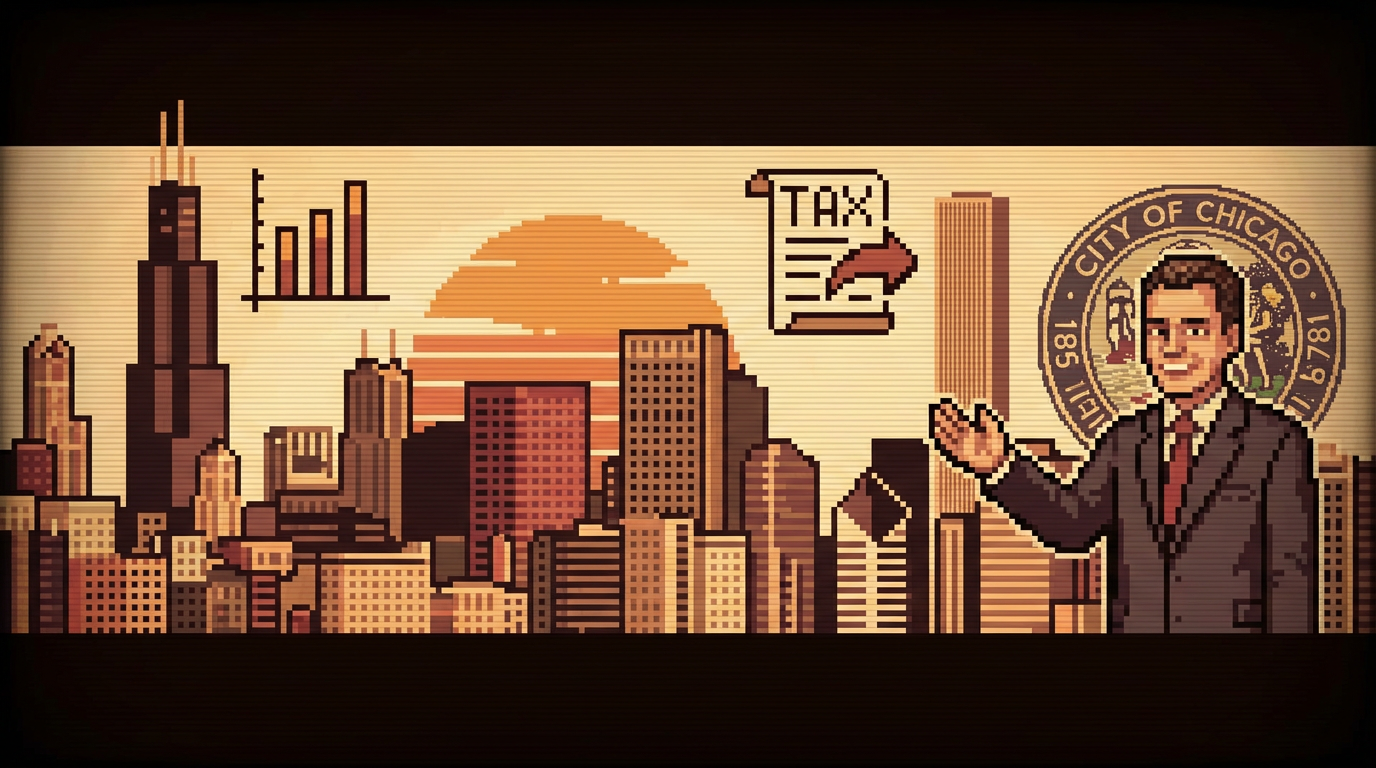
So he proposed what most mayors never survive: a $300 million property tax increase. The proposal hit Chicago residents where it hurt most, in their mailbox, on their mortgage statement. It was audacious. It was also politically toxic.
I spent that October making calls. Aldermen were furious before Johnson even finished his pitch. Ward organizations lit up their phone trees. The real estate industry mobilized. By November, when the City Council voted on the increase, the outcome was never in doubt. The final vote was 50-0 against it. Unanimous rejection. The kind of defeat that echoes through a mayor’s entire administration.

When the City Council Says No to Everyone
A 50-0 vote against your signature revenue proposal is not just a loss. It is a referendum. Aldermen from every ward, every demographic, every political faction telling a mayor that his core strategy has failed. I’ve covered city politics for years. I’ve never seen consensus like that.
Johnson was forced to abandon the property tax increase entirely. But the budget gap did not disappear. It simply shifted. The mayor’s office scrambled to find alternatives. Tax increment financing sweeps. Debt refinancing. Creative revenue projections. By December, Johnson had assembled a revised budget that passed the Council, but it was built on different foundations. Shakier ones.
The revised 2025 budget leaned heavily on $272 million in one-time revenue sources. That included $150 million in surplus funds from tax increment financing districts and optimistic projections about casino revenue. Some aldermen called those casino assumptions “shaky” during budget hearings. They were being polite.
The Structural Crisis Nobody Can Ignore
Here is what matters beyond the headlines: Chicago’s budget problem is not really about 2025. It is about the next twenty years. The city carries $35 billion in unfunded pension liabilities. That number sits like a stone in the city’s financial foundation. Every year it gets heavier.
In late 2024, Moody’s downgraded Chicago’s credit outlook to negative. The rating agency was explicit about why. The budget crisis exposed structural imbalances that one-time fixes cannot solve. The city spends money it does not have on promises it made decades ago. The property tax fight was just the visible symptom of a deeper disease.
If you want to understand why this matters to your property value, your street repair schedule, and your city services, visit the City of Chicago Office of Budget and Management website and track the pension obligations year by year. Or read the detailed analysis from the Civic Federation Chicago Fiscal Analysis team, which has been tracking Chicago’s fiscal health for decades. Both resources show that the 2025 budget battle was not an anomaly. It was a preview.
The Approval Rating Nobody Expected
Johnson took office in May 2023 with genuine momentum. He ran as a reformer. He had union support. He promised to fight for working people and hold the line on services. His approval rating started at 45 percent. Solid ground for a new mayor.
By March 2025, a University of Illinois at Chicago poll showed his approval had collapsed to 29 percent. That is a sixteen-point drop in less than two years. The property tax fight accelerated a decline that had already started. Chicagoans were watching their mayor lose control of the budget process in real time.
The political damage matters because it affects everything Johnson wants to do for the next three years. It affects his ability to pass ordinances, his credibility with aldermen who now know they can block him, his leverage with unions negotiating contracts. A mayor at 29 percent approval is a weakened mayor, even if he won the election by a wide margin.
What Comes Next Matters More Than What Came Before
Johnson faces a choice that will define his tenure. He can accept that the structural budget problem requires structural solutions, which means either raising revenue or cutting services or some combination that will be unpopular. Or he can hope that economic growth and one-time fixes continue to get him through each fiscal year.
There are no good options here. That is the real story. There is no scenario where Chicago solves its $35 billion pension problem without pain. The property tax increase was rejected not because Chicagoans want to raise revenue some other way. It was rejected because nobody wants to raise revenue at all. That is the political reality. That is also why Johnson’s gamble failed and why the next budget fight will be harder.
Chicago’s 2025 budget crisis was not just about filling a hole. It was about testing whether this mayor could lead the city through the kind of difficult decisions that define a political career. The answer, according to the Council vote and the poll numbers and the Moody’s downgrade, was no. Not this way. Not yet.
What happens next year when the budget gap returns? What does Johnson do when the city’s structural problems do not solve themselves? Those are the questions that will determine whether he finds a path forward or becomes another Chicago mayor overwhelmed by the city’s fiscal gravity. If you have thoughts on what Johnson should do next, or if you have covered budget meetings in your own community and seen similar dynamics, I want to hear from you. The only way we understand these stories is by sharing them.