The Ghost Newsrooms Taking Over Local Search Results—And Why Your City Should Care

The Numbers Tell a Chilling Story

Three years ago, a misinformation tracking firm would have laughed if you told them AI-generated local news sites were a serious problem. There barely were any. Today, they’re everywhere. The NewsGuard AI news site tracker recently flagged over 1,200 of these synthetic outlets—up from just 49 in early 2023. That’s not a trend. That’s an invasion.

The Ghost Newsrooms Taking Over Local Search Results—And Why Your City Should Care

I called a city editor I know in Ohio last month. She’d been in the business for sixteen years. When I asked her about these AI sites flooding local search results in her market, her response was blunt: “They’re eating our lunch.” She wasn’t being hyperbolic. She was describing the collapse of her industry in real time.

The crisis runs deeper than most people realize. The Pew Research Center 2025 State of the News Media report documented that the United States lost roughly 130 local newspapers in 2024 alone. That acceleration matters. It means fewer reporters knocking on city hall doors. Fewer people asking hard questions about municipal spending. Fewer newsrooms to hold power accountable.

Illustration for The Ghost Newsrooms Taking Over Local Search Results—And Why Your City Should Care

The Money Trail Leads Straight to City Hall

Here’s where it gets infuriating. Municipalities are spending taxpayer dollars on these ghost newsrooms. A Columbia Journalism Review investigation from late 2025 uncovered at least six local government advertising contracts worth a combined $2.3 million placed with AI-generated news sites. Cities were literally funding the very outlets that were replacing real journalism in their communities.

Think about that. A mayor’s office signs off on a “local news partnership.” An algorithm generates bland coverage of the ribbon-cutting ceremony. No reporter asks why the community center project is two years behind schedule. No journalist digs into the contractor connections. The city gets the press release dressed up as news. The AI farm gets paid. Real reporting never happens.

I’ve sat through enough budget meetings to know how this happens. Marketing directors see a cheap option. Procurement officers like the price point. Nobody asks the hard question: what are we actually getting for this money? And more importantly, what are we losing?

Google Promised to Fix This. It Didn’t.

Last February, Google announced updated publisher policies specifically designed to penalize AI-content farms and protect real journalism in search rankings. Good move on paper. The problem? It didn’t work. NewsGuard found that 60 percent of the flagged synthetic news sites still rank on the first page of local search results. When someone in your city searches “local news,” there’s a coin flip’s chance they’re landing on a machine-generated article instead of actual reporting.

The algorithm doesn’t care about truth. It cares about engagement metrics. And AI-generated local news sites are specifically engineered to game those metrics. They produce dozens of articles daily. They’re optimized for search. They hit all the keywords. Real newsrooms can’t compete on volume. They’re busy doing the hard work: building sources, verifying facts, writing stories that matter.

I called Google’s press office about this. They declined to comment on why the policy updates failed to deliver. Color me shocked.

This Is What a News Desert Actually Looks Like

The Northwestern University Local News Initiative calculated in 2025 that roughly 70 million Americans now live in counties with no local daily newspaper. That’s not a statistic. That’s your neighbor in Des Moines. Your cousin in Charlotte. Your friend in Cedar Rapids. It’s entire communities where nobody is professionally assigned to cover city council, school board, police accountability, or development decisions.

Into that vacuum step the AI farms. They flood the zone with content that looks like news. It has headlines. It has formatting. Sometimes it even has quotes pulled from public records. But there’s nobody behind it asking questions. Nobody building relationships with sources. Nobody connecting the dots between the mayor’s development plans and the campaign donations from the real estate developer.

I keep my police scanner on my desk for a reason. Half the stories I cover start with a radio call I overhear. AI doesn’t listen to scanners. It doesn’t show up at city council meetings at 7 p.m. on a Tuesday knowing it’ll run until midnight. It doesn’t chase down the question that doesn’t make sense. It doesn’t have the instinct that something is off.

What Actually Happens When Real Journalism Disappears

A city without local news coverage becomes a different place. Corruption moves faster. Tax waste goes unchallenged. Developers get favorable zoning because nobody’s asking why. School boards make decisions without public scrutiny. Police departments operate without accountability. This isn’t theoretical. It’s documented. It’s happening right now in hundreds of communities across America.

The editors sounding the alarm aren’t just protecting their jobs. They’re protecting the accountability infrastructure that makes democracy work at the neighborhood level. When you lose that, you don’t get efficiency. You get opacity. You get politics without witnesses.

What happens next depends on whether people wake up to what’s happening. City councils can stop funding AI news sites. Readers can demand real journalism and support it. Search engines can actually enforce their own policies. Regulators can ask hard questions about transparency and attribution. None of this is inevitable. The decline of local news isn’t fate. It’s a series of choices.

I want to hear from you about this. Has an AI-generated site started dominating your local search results? Has your city made spending decisions with these outlets? Have you noticed changes in the local news coverage in your community? Send me an email or post in the comments. This story needs witnesses. It needs people paying attention. That’s how real reporting works.

The Gaza Ceasefire That Wasn’t: How Phase Two Fell Apart and What Comes Next

The Deal That Sounded Different

Back in January 2025, there was genuine relief in certain corners of the world. Qatar, Egypt, and the United States had brokered what looked like an actual ceasefire agreement. Not a temporary halt. Not a pause while everyone caught their breath. A three-phase framework that was supposed to chart a course toward permanent peace. Phase One would see hostages and detainees released. Phase Two would be where the real work happened: negotiating the terms of a permanent end to the conflict. Phase Three would handle reconstruction and guarantees. It sounded methodical. It sounded possible.

The Gaza Ceasefire That Wasn't: How Phase Two Fell Apart and What Comes Next
The Gaza Ceasefire That Wasn’t: How Phase Two Fell Apart and What Comes Next

I’ve covered enough municipal negotiations to know that the structure of a deal matters less than what people actually intend to do with it. Structure is just the skeleton. Intention is the muscle. What happened over the next fourteen months would prove that lesson in the harshest possible way.

Illustration for The Gaza Ceasefire That Wasn't: How Phase Two Fell Apart and What Comes Next
Illustration for The Gaza Ceasefire That Wasn’t: How Phase Two Fell Apart and What Comes Next

The Stalling Pattern

Phase Two negotiations have collapsed or stalled at least three separate times since spring 2025. Each time, mediators would shuttle between capitals. Each time, Egyptian and Qatari diplomats would speak carefully about “fundamental gaps” between Israeli and Hamas positions. The language was diplomatic code for something more basic: the two sides still wanted fundamentally different outcomes. Israel wanted security guarantees and the right to resume military operations if threatened. Hamas wanted permanent borders, refugee rights, and an end to Israeli military presence. These weren’t minor disagreements. They were the opposite of minor.

What struck me, reporting on this from afar, was how the international framework kept pretending the framework could work. Diplomats don’t like admitting that deals are dead. They prefer to call them “paused” or “in a delicate phase.” The language itself becomes a way of avoiding the harder conversation: that fundamental gaps exist because the parties genuinely cannot reconcile their core demands. I learned this covering city council meetings where two sides would talk past each other for months before anyone admitted they wanted different things entirely.

By March 2026, Qatar’s Foreign Ministry acknowledged it was resuming shuttle diplomacy after a six-week breakdown. This was the fourth visit by Qatari envoys to Tel Aviv since the January ceasefire. Each trip represented another attempt to find compromise in spaces where compromise seemed impossible. The rhythm had become predictable. Talks would begin with guarded optimism. Within weeks, the fundamental gaps would resurface. Mediators would declare a timeout. Then the cycle would repeat.

The Human Cost of Stalling

While diplomats shuttled between capitals, the numbers kept growing. Gaza’s Health Ministry recorded over 48,000 Palestinian deaths since October 7, 2023. The UN General Assembly had cited these figures repeatedly through early 2026. That’s not a statistical footnote. That’s nearly 50,000 people. Parents who didn’t wake up. Children who never made it to school. Medical staff who ran out of supplies and then ran out of options.

The humanitarian situation was fracturing alongside the negotiations. You can check UN OCHA Gaza Humanitarian Updates for the latest assessments, but the core reality remained constant: resources were scarce, displacement was ongoing, and every week of stalled negotiations meant another week where reconstruction wasn’t happening. Hospitals still weren’t fully operational. Water systems were still compromised. Schools were still not reopening at scale. The ceasefire had stopped active combat, but it hadn’t actually started the process of rebuilding. Phase Two was supposed to bridge that gap. Phase Two wasn’t happening.

Where the Pressure Points Emerged

In February 2026, the United States withheld $95 million in military aid to Israel as diplomatic leverage during Phase Two negotiations. According to State Department officials cited by Reuters Middle East Coverage, this was meant to signal that Washington was serious about pushing for a permanent agreement. It was also a tacit admission that the normal channels weren’t working. When a mediating power starts withholding military aid, you know the diplomatic playbook has run out of its usual pages.

This move split reactions along predictable lines. Some saw it as necessary pressure. Others saw it as misguided interference. What it actually represented was exhaustion. The administration had tried quiet diplomacy, public statements, summits, working groups, and back-channel conversations. When none of that moved the needle, it reached for the one lever that international relations teaches you to pull: economic and military consequences.

The problem with that lever is that it assumes the other side cares more about the incentive than about their core position. That’s often not true. People and governments in entrenched positions rarely reverse course because of aid cuts. They find workarounds. They accept the loss as the price of staying firm. This is what I’ve seen in local disputes where one party loses funding and just becomes more committed to their position out of sheer stubbornness.

What This Actually Means

The Gaza ceasefire of January 2025 was real in one sense: fighting did decrease substantially. Hostages and prisoners were released in Phase One. But it was unreal in the way that mattered most. A ceasefire that doesn’t lead to peace is just a pause. It’s temporary. And temporary arrangements, by definition, end.

What we’re watching now is an open question about what comes next. Will Phase Two eventually produce a permanent agreement? Will mediators eventually find language that bridges the fundamental gaps? Or will the talks collapse entirely and fighting resume? Nobody wants to say this out loud, but those are the options on the table. There is no fourth path where everyone gets what they want and the problem quietly resolves itself. The gaps are too fundamental for that.

I’m still calling sources. I’m still reading the dispatches from mediators. I’m still trying to see what’s happening behind the diplomatic language. What I’m seeing is a process that hasn’t failed yet but is showing every sign of strain. The ceasefire is holding, technically. But Phase Two is stalled. And stalled agreements have a way of moving backward before they move forward again.

What’s your read on where this is heading? Have you been following these negotiations closely? I’d genuinely like to hear what you think is missing from the coverage or what angle you think deserves more attention.

Chicago’s Budget Battle: How Mayor Johnson’s Property Tax Reversal Became a Political Reckoning

The October Gamble That Changed Everything

Mayor Brandon Johnson walked into October 2024 with a problem that would reshape his political future. The city faced a $982.4 million budget gap for the coming year, the largest deficit Chicago had seen in recent memory. The math was brutal. Services were already stretched thin. Pensions loomed. Johnson needed revenue, fast.

Chicago's Budget Battle: How Mayor Johnson's Property Tax Reversal Became a Political Reckoning
Chicago’s Budget Battle: How Mayor Johnson’s Property Tax Reversal Became a Political Reckoning

So he proposed what most mayors never survive: a $300 million property tax increase. The proposal hit Chicago residents where it hurt most, in their mailbox, on their mortgage statement. It was audacious. It was also politically toxic.

I spent that October making calls. Aldermen were furious before Johnson even finished his pitch. Ward organizations lit up their phone trees. The real estate industry mobilized. By November, when the City Council voted on the increase, the outcome was never in doubt. The final vote was 50-0 against it. Unanimous rejection. The kind of defeat that echoes through a mayor’s entire administration.

Illustration for Chicago's Budget Battle: How Mayor Johnson's Property Tax Reversal Became a Political Reckoning
Illustration for Chicago’s Budget Battle: How Mayor Johnson’s Property Tax Reversal Became a Political Reckoning

When the City Council Says No to Everyone

A 50-0 vote against your signature revenue proposal is not just a loss. It is a referendum. Aldermen from every ward, every demographic, every political faction telling a mayor that his core strategy has failed. I’ve covered city politics for years. I’ve never seen consensus like that.

Johnson was forced to abandon the property tax increase entirely. But the budget gap did not disappear. It simply shifted. The mayor’s office scrambled to find alternatives. Tax increment financing sweeps. Debt refinancing. Creative revenue projections. By December, Johnson had assembled a revised budget that passed the Council, but it was built on different foundations. Shakier ones.

The revised 2025 budget leaned heavily on $272 million in one-time revenue sources. That included $150 million in surplus funds from tax increment financing districts and optimistic projections about casino revenue. Some aldermen called those casino assumptions “shaky” during budget hearings. They were being polite.

The Structural Crisis Nobody Can Ignore

Here is what matters beyond the headlines: Chicago’s budget problem is not really about 2025. It is about the next twenty years. The city carries $35 billion in unfunded pension liabilities. That number sits like a stone in the city’s financial foundation. Every year it gets heavier.

In late 2024, Moody’s downgraded Chicago’s credit outlook to negative. The rating agency was explicit about why. The budget crisis exposed structural imbalances that one-time fixes cannot solve. The city spends money it does not have on promises it made decades ago. The property tax fight was just the visible symptom of a deeper disease.

If you want to understand why this matters to your property value, your street repair schedule, and your city services, visit the City of Chicago Office of Budget and Management website and track the pension obligations year by year. Or read the detailed analysis from the Civic Federation Chicago Fiscal Analysis team, which has been tracking Chicago’s fiscal health for decades. Both resources show that the 2025 budget battle was not an anomaly. It was a preview.

The Approval Rating Nobody Expected

Johnson took office in May 2023 with genuine momentum. He ran as a reformer. He had union support. He promised to fight for working people and hold the line on services. His approval rating started at 45 percent. Solid ground for a new mayor.

By March 2025, a University of Illinois at Chicago poll showed his approval had collapsed to 29 percent. That is a sixteen-point drop in less than two years. The property tax fight accelerated a decline that had already started. Chicagoans were watching their mayor lose control of the budget process in real time.

The political damage matters because it affects everything Johnson wants to do for the next three years. It affects his ability to pass ordinances, his credibility with aldermen who now know they can block him, his leverage with unions negotiating contracts. A mayor at 29 percent approval is a weakened mayor, even if he won the election by a wide margin.

What Comes Next Matters More Than What Came Before

Johnson faces a choice that will define his tenure. He can accept that the structural budget problem requires structural solutions, which means either raising revenue or cutting services or some combination that will be unpopular. Or he can hope that economic growth and one-time fixes continue to get him through each fiscal year.

There are no good options here. That is the real story. There is no scenario where Chicago solves its $35 billion pension problem without pain. The property tax increase was rejected not because Chicagoans want to raise revenue some other way. It was rejected because nobody wants to raise revenue at all. That is the political reality. That is also why Johnson’s gamble failed and why the next budget fight will be harder.

Chicago’s 2025 budget crisis was not just about filling a hole. It was about testing whether this mayor could lead the city through the kind of difficult decisions that define a political career. The answer, according to the Council vote and the poll numbers and the Moody’s downgrade, was no. Not this way. Not yet.

What happens next year when the budget gap returns? What does Johnson do when the city’s structural problems do not solve themselves? Those are the questions that will determine whether he finds a path forward or becomes another Chicago mayor overwhelmed by the city’s fiscal gravity. If you have thoughts on what Johnson should do next, or if you have covered budget meetings in your own community and seen similar dynamics, I want to hear from you. The only way we understand these stories is by sharing them.

Why Your Local High School Football Coverage Reads Like a Press Release

The Friday Night Information Pipeline

At 10:47 PM last Friday, the Riverside High Ravens beat Central Valley 28-14. By 11:15 PM, identical game recaps appeared on three different news websites, each containing the same statistics, the same quotes, and the same glowing description of quarterback Jake Morrison’s “clutch performance in the fourth quarter.” The bylines were different. The sources were identical.

This isn’t coincidence. It’s the modern reality of high school sports journalism, where understaffed newsrooms rely increasingly on information pipelines that flow directly from coaches, athletic directors, and team parents wielding smartphones. The result is coverage that looks like journalism but functions like public relations.

The Stat Sheet Assembly Line

Most high school sports coverage begins with a single document: the official game statistics provided by the home team’s athletic department. These stat sheets, often compiled by student managers or volunteer parents, become the foundation for multiple news stories across different outlets. When the Eastwood Eagles defeated Madison High 42-21 in October, seven different publications ran stories using identical rushing yard totals and tackle statistics.

The problem isn’t the accuracy of the numbers. Madison High’s athletic director, Sarah Chen, maintains meticulous records and has been tracking stats for twelve years. The issue is that downstream reporting rarely verifies these figures independently. When a statistic gets entered incorrectly (as happened during Eastwood’s homecoming game when a fumble recovery was credited to the wrong player), that error spreads across multiple news stories and becomes accepted fact.

Local sports reporter Mike Castellanos learned this lesson during his first year covering prep football for the County Herald. “I published that the Lincoln Lions had allowed only 140 rushing yards in their win over Roosevelt,” he recalls. “Three days later, I got a call from Roosevelt’s coach saying they’d actually rushed for 240 yards. I’d copied the wrong line from the stat sheet, and so had two other reporters who’d used the same source.”

Quote Factories and Information Control

The postgame interview has become a choreographed performance. Coaches know which phrases resonate with local media and have learned to deliver soundbites that require minimal editing. “We executed our game plan” and “the kids played with heart” appear in high school sports stories with mathematical regularity because they’re safe, quotable, and nearly impossible to fact-check.

Central Valley head coach Tom Bradley has refined this process over eight seasons. After each game, he provides reporters with a typed statement containing key statistics, player highlights, and pre-approved quotes. “It saves everyone time,” Bradley explains. “The reporters get their story, and I control the message.” Three different news outlets used Bradley’s prepared statement verbatim after Central Valley’s upset win over Riverside, changing only the headline and opening paragraph.

The challenge intensifies when controversial incidents occur. When a bench-clearing brawl erupted during the Westfield-Northgate rivalry game in September, initial news coverage relied exclusively on statements from both schools’ athletic directors. Video footage posted by parents on social media later contradicted several key details in those official accounts, but few outlets returned to update their original reporting.

The Parent Network Effect

Perhaps the most overlooked information source in high school sports coverage is the network of team parents who document games through photography, social media posts, and informal communication channels. These parents often know more about player performances and team dynamics than external reporters who cover multiple schools across large geographic areas.

Jessica Martinez, whose daughter plays volleyball for Hillcrest High, maintains detailed statistics for every match and shares them with local sports writers. “The reporter from the Tribune calls me every Tuesday for the previous week’s results,” Martinez says. “I know more about our team’s rotation patterns and serve percentages than most people realize.” When Hillcrest made an unexpected run to the state tournament, Martinez’s documentation became the primary source material for feature stories about the team’s preparation and strategy.

This parent network creates both opportunities and complications for accurate reporting. Parents provide access and insight that professional journalists often lack, but they also carry inherent biases toward their own children’s teams. When conflicts arise between parent accounts and official school statements, reporters must navigate relationships that extend beyond simple source-journalist dynamics into community social structures.

The Verification Gap

The accelerated pace of digital publishing has created pressure for immediate coverage that often bypasses traditional verification processes. When Roosevelt High’s star running back suffered what appeared to be a serious knee injury during a televised game against Jefferson, three news websites published stories within hours speculating about the severity and potential impact on his college recruitment. The actual diagnosis (a minor sprain that would sideline him for only two weeks) didn’t emerge until the following Tuesday.

Veteran sports editor Patricia Wong remembers when high school coverage operated under different constraints. “We had until Sunday to get the Friday night games into Monday’s paper,” she recalls. “That gave us time to call coaches on Saturday, verify statistics, and sometimes even attend Saturday morning film sessions where coaches would discuss what actually happened versus what appeared to happen.” Current digital deadlines rarely allow for such thorough follow-up reporting.

The verification challenge extends beyond individual games to season-long narratives. When recruiting websites began tracking high school athletes more closely, stories about college prospects became common in local coverage. However, few local reporters have the resources to independently verify scholarship offers or recruiting interest, leading to coverage that amplifies unsubstantiated claims about student-athlete opportunities.

Beyond the Press Box

Understanding how information flows through high school sports coverage reveals larger questions about local journalism’s relationship with community institutions. Schools, parents, and local media outlets exist within interconnected networks where social relationships influence professional reporting practices. The parent who provides weekly statistics might also work on the school board. The coach who grants exclusive interviews might also coach the reporter’s child in youth sports.

These relationships don’t necessarily compromise journalistic integrity, but they do create information ecosystems where verification becomes more complex than simply checking facts. When community trust depends partly on maintaining access to sources who also function as neighbors and fellow community members, the traditional adversarial model of journalism requires adaptation.

The next time you read about your local high school’s victory, consider the path that information traveled from field to publication. Who compiled the statistics? Which voices were included in the narrative? What verification steps occurred between the final whistle and the published story? The answers might surprise you.

Why Your Town’s Fall Festival Budget Matters More Than You Think

The $47,000 Question That Splits City Councils

When Millfield’s city council voted 4-3 last Tuesday to cut funding for the annual Harvest Days festival, Mayor Patricia Chen received 89 phone calls by Thursday morning. The decision to reduce the event budget from $47,000 to $22,000 wasn’t just about carnival rides and corn dog vendors. It exposed a fundamental tension playing out in municipal chambers across the region: what role should local government play in funding community celebrations?

The debate shows broader shifts in how cities allocate shrinking discretionary funds. Three neighboring towns have eliminated festival funding entirely since 2019, while others have doubled down on events as economic development tools. The stakes go far beyond weekend entertainment.

The Economics Behind the Cotton Candy

Festival funding generates measurable returns that city managers track with spreadsheet precision. Westbrook’s three-day Heritage Festival brought $1.2 million in visitor spending to local businesses last year, according to a study commissioned by the chamber of commerce. Hotel occupancy jumped 78 percent during the event weekend. Restaurant revenues increased 340 percent compared to a typical September weekend.

But the math isn’t always favorable. Riverside canceled its annual River Fest after five years when costs exceeded $85,000 while generating only $31,000 in measurable economic activity. The city’s finance director, Michael Torres, found that most attendees lived within a 15-mile radius and would have spent money locally anyway. “We were subsidizing entertainment for our own residents,” Torres said in a budget hearing transcript.

The calculation gets more complex when factoring in indirect benefits. Property values within festival districts typically see modest increases, though economists debate whether events drive the appreciation or simply reflect existing neighborhood desirability.

When Volunteers Become the Safety Net

Greendale’s Apple Festival survived budget cuts through a model that other communities now study and copy. When the city reduced funding from $65,000 to $18,000 in 2021, the Rotary Club and Chamber of Commerce formed a joint committee that took over operations. They recruited 340 volunteers and secured 23 local business sponsors.

The transition wasn’t smooth. Attendance dropped 40 percent the first year under volunteer management, partly because marketing budgets disappeared. Some longtime vendors couldn’t afford increased booth fees needed to cover costs previously subsidized by city funds. But by year three, attendance recovered to 85 percent of previous levels.

The volunteer model creates sustainability challenges that municipal funding avoided. Key organizers age out or relocate. Corporate sponsors shift priorities. Weather disasters can bankrupt volunteer-run events lacking city financial backing. Maplewood’s Founders Day collapsed entirely when its primary organizer moved to Florida and no successor emerged.

The Political Calculus of Corn Dogs

Festival funding votes reveal council dynamics that budget line items hide. In Millfield’s case, the 4-3 vote split along geographic lines rather than traditional political affiliations. Council members representing the downtown district supported festival funding, while those from suburban wards voted for cuts. The divide reflected constituent priorities rather than partisan differences.

Timing matters enormously in these decisions. Councils making budget cuts during election years face different pressures than those with secure seats. Oakwood’s council eliminated festival funding in January but restored it by May following sustained citizen advocacy. The reversal came after petition drives and packed council meetings, but also after favorable first-quarter revenue reports made restoration financially feasible.

Some communities have found middle-ground approaches that satisfy competing interests. Fairview created a dedicated festival tax district where property owners vote annually on a special assessment funding community events. The mechanism generates stable revenue while giving residents direct control over spending levels.

Beyond the Bottom Line

Festival funding decisions reveal community values that go beyond financial calculations. When Brookhaven canceled its annual Music in the Park series, the city saved $28,000 but lost something harder to quantify. Social worker Janet Kim noticed increased isolation among senior residents who had attended weekly concerts for decades. Youth programs lost a regular gathering space that had helped informal mentorship between teenagers and older community members.

The ripple effects surprised city officials. Library circulation dropped during summer months when families had traditionally combined concert attendance with book borrowing. Local musicians lost performance opportunities that had provided supplemental income and community connections. The economic impact study hadn’t captured these secondary consequences.

Some cities have developed creative funding mechanisms that acknowledge both fiscal constraints and community needs. Cedar Falls established a “cultural investment fund” financed through hotel tax revenue specifically designated for events and arts programming. The dedicated funding source removes festivals from annual budget battles while ensuring sustainable financing.

Whether your community funds festivals through tax revenue, volunteer efforts, or hybrid models, these decisions shape the social fabric that goes far beyond event weekends. The question isn’t whether community celebrations have value, but how that value weighs against competing municipal priorities when resources are tight.

Tech Giants Scramble as FTC’s AI Rules Draw First Blood

The Regulatory Hammer Falls

The phone calls started coming in around 9 AM Pacific on February 15th. Three different sources at Meta, all speaking on background, all saying the same thing: the company had just been hit with a $2.8 million fine for failing to properly label AI-generated political advertisements during the midterm primaries. The FTC AI Disclosure Framework had claimed its first major victim.

Tech Giants Scramble as FTC's AI Rules Draw First Blood
Tech Giants Scramble as FTC’s AI Rules Draw First Blood

This wasn’t supposed to happen. Tech industry lawyers had been telling their clients that the new rules, which took effect in January, would have a gradual rollout period. Companies could work out the kinks. Enforcement would be light-handed initially. They were wrong.

The framework requires any company operating AI systems that process more than 10,000 user interactions daily to flag AI-generated content within 72 hours of publication. For Meta, with billions of daily interactions, this meant retrofitting their entire content pipeline. They missed the deadline by four days on a batch of targeted political ads. The FTC noticed.

Illustration for Tech Giants Scramble as FTC's AI Rules Draw First Blood
Illustration for Tech Giants Scramble as FTC’s AI Rules Draw First Blood

Following the Money Trail

Google’s Q4 2025 earnings call revealed the true cost of compliance. Chief Financial Officer Ruth Porat disclosed that the company’s operational expenses jumped 23% because of AI transparency requirements. That translates to roughly $4.2 billion in additional costs for a single quarter.

The expense breakdown tells the story. Google hired 1,200 new compliance officers. They built dedicated AI auditing systems. They rewrote content management protocols across YouTube, Search, and Gmail. Every AI-generated suggestion, every algorithmically curated result, every automated response now requires documentation trails that regulators can follow.

Industry insiders describe a scramble unlike anything they’ve seen since GDPR implementation. One former Google engineer, now working at a compliance consulting firm, told me companies are building “AI transparency infrastructure from scratch.” There’s no playbook. No existing systems to adapt. Just federal deadlines and mounting legal exposure.

The OpenAI Warning Shot

Sarah Chen’s testimony before the Congressional AI Oversight Committee sent shockwaves through Silicon Valley. OpenAI’s Chief Legal Officer didn’t mince words: the new transparency requirements could delay GPT-5’s commercial release by six months.

Chen outlined the compliance challenges facing frontier AI companies. Every training dataset requires provenance documentation. Every model output needs traceability markers. Every commercial deployment demands real-time disclosure mechanisms. For a system like GPT-5, which processes millions of queries simultaneously, this means rebuilding core architecture.

The testimony revealed internal OpenAI projections showing compliance costs eating into 40% of their R&D budget. Other AI companies are facing similar pressures. Anthropic quietly pushed back Claude’s next major update. Stability AI is reassessing their commercial timeline. The entire industry is recalibrating.

Where Sources Diverge

The regulatory response splits along predictable lines. FTC sources emphasize consumer protection. They point to deepfake political ads, AI-generated misinformation, and algorithmic manipulation as clear justifications for transparency requirements. One commission staffer described the rules as “bringing AI out of the black box.”

Tech industry sources paint a different picture. They argue the 72-hour disclosure window is technically unfeasible for real-time AI systems. They claim compliance costs will stifle innovation and benefit larger companies that can absorb regulatory overhead. Smaller AI startups, they warn, face existential threats.

Academic researchers offer a third perspective. Several computer science professors I spoke with questioned whether current disclosure methods actually improve transparency. Labeling AI-generated content might satisfy regulatory requirements, but it doesn’t explain algorithmic decision-making or training data biases. The rules address symptoms, not root causes.

Reading the Enforcement Tea Leaves

Meta’s fine signals the FTC’s enforcement strategy. Rather than targeting technical violations, regulators focused on content with clear public impact: political advertising during election season. This suggests future enforcement will prioritize areas affecting democratic processes, consumer choice, and public safety.

The size of the penalty also matters. $2.8 million is pocket change for Meta, but the precedent is significant. Industry lawyers expect escalating fines as compliance deadlines pass. More importantly, the FTC’s willingness to act quickly shows they’re serious about implementation.

Early enforcement patterns reveal regulatory priorities. Political content gets immediate attention. Financial services AI faces heightened scrutiny. Healthcare applications trigger additional review processes. Entertainment and productivity tools receive less aggressive oversight. Companies are adjusting their compliance strategies accordingly.

The next six months will determine whether these transparency rules achieve their stated goals or simply create new bureaucratic burdens. Tech companies are betting on the latter, while regulators insist meaningful AI oversight requires short-term disruption. My sources keep calling with updates. The story keeps changing. What questions are you seeing that aren’t getting answered in the mainstream coverage?

Mexico’s Cartel Crackdown Sends Migrant Surge Across Texas Border

The Numbers Tell the Story

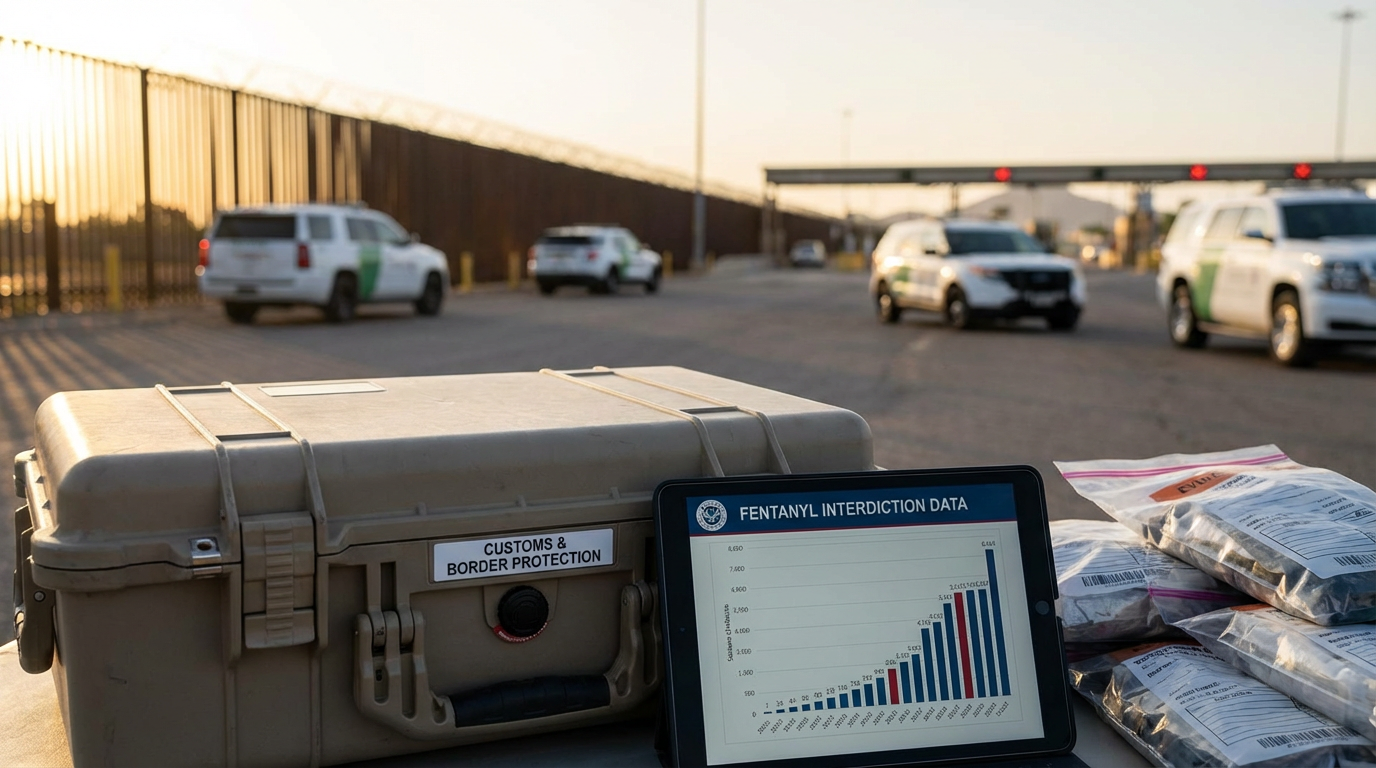
The police scanner on my desk has been busier than usual these past three weeks. Static breaks every few minutes with Border Patrol codes I’ve learned to decode after fifteen years covering this beat. The latest U.S. Customs and Border Protection statistics confirm what local emergency responders have been telling me: February saw 18,400 apprehensions in the Del Rio sector alone, a 67% jump from January’s numbers.

Mexico's Cartel Crackdown Sends Migrant Surge Across Texas Border
Mexico’s Cartel Crackdown Sends Migrant Surge Across Texas Border

This isn’t seasonal migration. This is displacement on a scale that has overwhelmed border infrastructure from Eagle Pass to Laredo. The timing lines up perfectly with Mexico’s Operation Limpieza, President Claudia Sheinbaum’s aggressive cartel crackdown that launched February 15. Intelligence estimates suggest the operation displaced roughly 3,200 cartel members from Tamaulipas, creating a domino effect that’s rippled north across the Rio Grande.

Border Patrol sources confirm what city officials feared: when Mexico cracks down, the problem doesn’t disappear. It moves. And right now, it’s moving into Texas border towns already stretched beyond capacity.

Local Emergency Declarations

Eagle Pass Mayor Rolando Salinas didn’t mince words when he declared a local emergency March 1. I’ve covered Salinas for eight years, and he’s not prone to dramatic gestures. But when your city’s detention capacity hits 156% over two weeks, drama becomes necessity.

“We’re housing families in school gymnasiums,” Salinas told me during a hurried phone call between emergency meetings. “Our water treatment plant wasn’t designed for this population surge. We’re trucking in portable toilets and setting up medical triage in parking lots.”

The declaration unlocks state emergency funds, but those take time to flow down. Meanwhile, Eagle Pass operates on a municipal budget designed for 29,000 residents, not the additional thousands seeking temporary shelter and processing. Local churches have opened their doors. The high school canceled evening activities to convert the cafeteria into sleeping quarters.

The Human Cost of Displacement

Border Patrol Agent Miguel Rodriguez has worked the Laredo sector for twelve years. He’s seen surges before, but nothing like the warehouse raid February 28 that netted 89 unaccompanied minors. Children ages six to seventeen, crammed into a converted storage facility with minimal ventilation and no running water.

“These weren’t kids crossing with smugglers,” Rodriguez explained during our interview. “These were children whose families fled cartel violence, got separated during the chaos, and ended up warehoused like cargo. The youngest couldn’t even tell us her last name.”

The warehouse raid shows how Mexico’s Operation Limpieza created unintended consequences. When cartel territories shift rapidly, established smuggling routes collapse. Families pay guides who abandon them. Children get lost in the shuffle. What was intended to reduce organized crime has temporarily increased human trafficking as desperate people turn to anyone offering passage north.

Border Patrol agents now work 16-hour shifts processing cases that require specialized care. Unaccompanied minors need interpreters, medical screening, and coordination with federal child welfare agencies. Local hospitals report treating dehydration, malnutrition, and trauma symptoms at rates 40% higher than typical February levels.

Financial Strain on Border Counties

The Texas Border Coalition emergency report released this week quantifies what local officials have been calculating on napkins: the surge has cost Texas border counties an additional $2.3 million in emergency services and temporary housing since mid-February. That number climbs daily.

Webb County Judge Tano Tijerina broke down the costs during Tuesday’s emergency commissioners meeting: $340,000 in overtime for sheriff’s deputies, $180,000 for emergency medical services, $290,000 for temporary shelter operations, and $75,000 for interpreter services. Smaller counties face proportionally higher burdens.

Maverick County, with 58,000 residents, has spent $145,000 on portable sanitation alone. Their emergency management coordinator, Maria Gonzalez, estimates the county’s reserve fund will be exhausted within six weeks without state or federal assistance. “We’re not asking for handouts,” Gonzalez said. “We’re asking for recognition that border counties shouldn’t bear the full cost of international policy decisions.”

Local businesses face mixed impacts. Hotels and restaurants see increased demand, but retail shops lose customers as downtown areas become staging grounds for processing centers. Property owners near the river report decreased values as temporary camps appear overnight.

What Comes Next

Mexico’s Operation Limpieza shows no signs of slowing. President Sheinbaum has deployed additional federal troops to Tamaulipas and announced plans to expand operations into neighboring states. Border Patrol intelligence suggests cartel displacement will continue through spring as pressure intensifies on remaining strongholds.

Texas border mayors plan a joint meeting next week to coordinate response strategies and lobby for state assistance. They’re requesting National Guard support for logistics, not enforcement. The goal is managing humanitarian needs while maintaining border security protocols.

Federal agencies promise additional resources, but timeline remains unclear. Border Patrol is reallocating agents from other sectors, straining coverage elsewhere. Immigration courts are scheduling emergency sessions to process cases faster, but even expedited proceedings take weeks.

The situation requires sustained attention from state and federal officials who understand that border security and humanitarian response aren’t opposing priorities. They’re connected challenges that demand coordinated solutions. I’ll keep monitoring scanner traffic and making those late-night calls to sources. This story is far from over, and our communities deserve accurate, timely reporting on how national policies play out in their backyards.

Why Three Businesses Closed on Main Street While Two Others Thrived This Quarter

The Pattern Hidden in Plain Sight

Walk down Main Street today and you’ll pass the empty storefront where Martinez Family Bakery served tres leches cake for fifteen years, right next to the bustling new location of Precision Auto Repair, which moved here from across town after doubling its staff. The contrast tells a story that goes deeper than simple wins and losses.

City business license data from the third quarter shows 23 new business applications filed alongside 19 closure notifications. But look into the details behind those numbers, and you’ll find the real story isn’t about whether our local economy is growing or shrinking. It’s about which businesses understand the new rules of survival.

The Infrastructure Reality No One Talks About

Maria Martinez closed her bakery not because customers stopped coming, but because her 1970s-era electrical system couldn’t handle the new display case refrigeration units required by updated health codes. The $47,000 upgrade quote exceeded her annual profit margin by $12,000. “I could bake or I could be an electrician,” Martinez told me last Tuesday, keys still warm in her palm from the final lockup.

Meanwhile, Precision Auto’s owner Jake Brennan spent $31,000 upgrading his electrical capacity before opening his doors. He’d learned from watching three other auto shops struggle with power issues over the past two years. “You either plan for the infrastructure costs upfront, or you pay them later when you can’t afford it,” Brennan said, pointing to the 240-volt outlets that power his diagnostic equipment.

Planning Director Susan Chen estimates that 40 percent of business closures this year involved infrastructure compliance issues that owners couldn’t afford to address after the fact. The pattern shows up everywhere: restaurants needing grease trap upgrades, salons requiring ventilation improvements, and retail stores installing accessibility features.

The Permit Process as Predictor

Every business opening requires multiple permits, but successful applicants share one trait: they show up to City Hall prepared. Brennan submitted his complete application package on March 15th and received approval April 22nd. His folder included architectural drawings, electrical schematics, and a traffic impact study he commissioned himself.

Compare that to Coastal Crafts, which closed after eight months of permit delays. Owner Jennifer Walsh submitted her initial application without required fire department clearances, then spent six months in revision cycles. By the time she received approval, her lease had increased 30 percent and her startup capital was depleted. “I thought I was being thorough,” Walsh said. “I had no idea thorough meant hiring three different consultants.”

Building Inspector Tom Rodriguez processes roughly 200 business applications annually. He estimates that applications missing key documentation take four times longer to approve than complete submissions. “The businesses that succeed do their homework before they walk in here,” Rodriguez explained while reviewing a stack of incomplete applications.

Labor Math and Location Logic

The businesses opening successfully this quarter share another pattern: they’ve solved the staffing equation before signing leases. New restaurant Harbor View Bistro opened with eight employees already hired and trained. Owner David Park spent three months recruiting while his space underwent renovation, offering wages 20 percent above industry average plus health benefits.

Park’s approach contrasts sharply with Sunset Grill, which closed in September after operating short-staffed for eleven months. Previous owner Mike Thompson tried hiring at minimum wage and couldn’t maintain consistent service. “I was cooking, serving, and running register most nights,” Thompson said. “You can’t build repeat customers when you can’t guarantee someone will answer the phone.”

Economic Development Coordinator Lisa Chang tracks these patterns through quarterly business surveys. Her data shows that businesses starting with full staffing at competitive wages have a 78 percent survival rate through their first year. Those starting understaffed show a 31 percent survival rate.

The Succession Question Everyone Avoids

Five of this quarter’s closures involved retirement without succession planning. Hardware store owner Robert Kim ran Eastside Hardware for 28 years before closing last month. He’d trained no successor and couldn’t find a buyer willing to maintain the store’s extensive inventory system and customer credit accounts.

Kim’s closure eliminated the only hardware store within walking distance for residents east of Fifth Street. Three other businesses that relied on Eastside Hardware’s foot traffic report decreased sales since the closure. “Bob knew every customer’s project history,” said neighboring shop owner Carol Stevens. “That knowledge walked out the door with him.”

The pattern repeats across service businesses built around personal relationships. Chang’s office now tracks business succession plans, but participation remains voluntary. Only twelve of the city’s 89 established businesses have formal succession documentation on file.

What the Numbers Actually Measure

Behind every business license approval and closure notice sits a family making calculated bets about their financial future. The Martinez bakery closure meant three employees found new jobs at different businesses. The Precision Auto opening created five positions paying above-average wages with benefits.

These individual decisions reshape neighborhood commercial districts in ways that monthly statistics can’t capture. The stretch of Main Street between Second and Fourth now has two vacant storefronts and three thriving businesses within a four-block radius. Whether that represents decline or renewal depends on which direction you’re walking and what you’re looking for when you get there.

Why Your Water Bill Just Went Up While Main Street Still Floods

The Tuesday Night Decision That Will Cost You $84 More This Year

City Council member Patricia Chen pulled out her calculator during last Tuesday’s budget session. She punched in numbers while Public Works Director Mike Rodriguez explained why the water infrastructure fund needed an immediate 15% rate increase. The room fell silent except for the clicking of Chen’s calculator and the steady drip from the ceiling tiles above the council chambers.

That drip, Rodriguez later admitted, comes from a pipe installed in 1962. It’s the same vintage as most of the city’s water infrastructure, and it perfectly shows why residents will pay an average of $84 more annually starting next month. The vote was 4-3, with Chen ultimately supporting the increase after her calculations showed the alternative: a $2.3 million emergency bond if the system fails catastrophically.

The Numbers Behind the Broken Pipes

Rodriguez presented data showing 47 water main breaks last year, compared to 12 in 2019. That’s a pretty dramatic jump. The department responded to these breaks with an average repair time of 8.2 hours, leaving entire neighborhoods without water. The longest outage lasted 31 hours on Elm Street, affecting 847 households during a February freeze.

The infrastructure assessment completed in March revealed that 68% of the city’s water lines are approaching or have exceeded their expected lifespan. Finance Director Sarah Kim told the council that replacing just the most critical 12 miles of pipeline would cost $4.8 million. The current water fund balance sits at $1.2 million, barely enough to cover routine maintenance through the fiscal year.

Council member David Torres, who voted against the rate increase, argued for seeking federal infrastructure grants instead. But Rodriguez explained that grant applications require matching funds the city doesn’t have, and the approval process takes 18 to 24 months. “We can’t wait two years for a grant that might not come while our pipes are failing every week,” Rodriguez said during the three-hour debate.

Where Your Extra Money Actually Goes

The rate increase will generate approximately $890,000 annually, according to Kim’s projections based on current usage patterns. Of that amount, $620,000 goes specifically toward pipeline replacement, focusing first on the downtown business district where three major breaks last year caused significant flooding and business interruptions.

Maria Santos, owner of Santos Family Restaurant on Main Street, attended the meeting to support the rate increase. Her restaurant suffered $15,000 in damage when a century-old pipe burst beneath Main Street in August, sending brown water cascading through her dining room. “I’d rather pay more on my water bill than clean sewage out of my kitchen again,” Santos told the council.

The remaining $270,000 will fund two additional maintenance crew positions and upgraded detection equipment. Currently, the city relies on resident complaints to identify most leaks. The new system will use acoustic sensors to detect problems before they become visible breaks, potentially reducing emergency repairs by 40%, according to industry studies Rodriguez cited.

The Domino Effect on Development

The infrastructure problems extend beyond existing residents. Planning Director Jennifer Walsh explained that three proposed housing developments totaling 340 units are on hold because the current water system cannot reliably handle additional connections. This directly impacts the city’s efforts to address the housing shortage that has pushed median rent up 23% in two years.

Developer Mark Peterson has been waiting eight months for approval to build 85 affordable housing units on the east side. His project requires water service guarantees the city cannot currently provide. “We’re losing potential tax revenue and needed housing because our pipes can’t handle growth,” Walsh told the council. Peterson estimates his delay costs approximately $12,000 monthly in financing and opportunity costs.

The water infrastructure bottleneck also affects commercial development. Two businesses withdrew applications for expansion permits after learning about potential water service limitations. Economic Development Coordinator Lisa Chang projects the city could lose $2.4 million in annual tax revenue if these infrastructure constraints continue limiting growth.

What Happens Next

Rodriguez will present a detailed replacement schedule at next month’s meeting, prioritizing the 12 most critical pipeline segments. Work will begin in October with the section beneath Main Street that handles the central business district. Residents can expect periodic water service interruptions, typically lasting 2-4 hours during daytime construction.

The city will also launch a leak reporting app allowing residents to photograph and GPS-tag potential problems. This system, costing $18,000 to implement, should reduce response times and catch issues before they require emergency repairs. Rodriguez expects the combination of proactive detection and systematic replacement to cut emergency repairs by half within two years.

Chen, who cast the deciding vote, summed up the council’s dilemma: pay now for planned improvements or pay much more later for emergency fixes. The next infrastructure assessment, scheduled for 2026, will show whether this rate increase prevented the crisis or merely delayed it. For residents like Santos, who still mops her restaurant floor nervously during heavy rains, that assessment can’t come soon enough.

Three Districts, Three Battles: How Local School Boards Became Ground Zero for America’s Culture Wars

When Fairfield Parent Jennifer Martinez Steps to the Microphone

Jennifer Martinez clutches a manila folder as she approaches the podium at Tuesday’s Fairfield Independent School District meeting. The folder contains screenshots of books in her daughter’s middle school library, highlighted passages from curriculum guides, and a petition with 247 signatures. She has three minutes to speak.

Martinez is the new face of school board politics. A marketing coordinator and mother of two, she had never attended a school board meeting before 2022. Now she’s here for the fourth time this year, part of a wave of parent activism that’s reshaping local education governance across the country. What happens in Fairfield mirrors battles playing out in districts nationwide, but the stakes feel most personal when the decisions affect your child’s classroom.

The Numbers Behind the Noise

School board meetings in Texas averaged 42 minutes in 2019, according to data from the Texas Association of School Boards. By 2023, that figure had jumped to 78 minutes. The difference comes almost entirely from public comment periods that now stretch past midnight in some districts.

Local districts report spending 40% more on security for board meetings compared to pre-pandemic levels. Cedar Hill ISD installed panic buttons at board member seats after receiving threats. Richardson ISD moved meetings to larger venues to accommodate crowds. These aren’t isolated incidents. They’re symptoms of how education policy has moved from bureaucratic backwater to front-page news.

The shift reflects deeper changes in how Americans view public education. A 2023 Gallup poll showed confidence in public schools dropped to 28%, the lowest level since polling began in 1973. Parents who once trusted school officials to make educational decisions now demand transparency in curriculum choices, library selections, and disciplinary policies.

Where Federal Mandates Meet Local Reality

Federal education policy often feels abstract until local districts must implement it. Title IX guidance from Washington becomes a heated debate about transgender student athletes in Plano. Federal reading initiatives translate to specific textbook purchases that parents can examine at Lewisville board meetings. Infrastructure spending creates tangible benefits, like the new HVAC systems funded through pandemic relief that parents can see improving their children’s learning environment.

Take the recent controversy over social-emotional learning curricula. While national politicians debate SEL programs in broad terms, parents in Allen ISD review specific lesson plans that ask third-graders to identify their feelings using emotion wheels. The abstract becomes concrete when your eight-year-old comes home asking questions about concepts you feel should be addressed at home, not school.

School board members find themselves caught between federal requirements they cannot ignore and community pressures they cannot escape. McKinney ISD Trustee Sarah Johnson describes walking a “tightrope between compliance and community values” as she handles mandates from Austin and Washington while facing constituents at the grocery store who question every policy decision.

The Money Trail That Shapes Everything

Follow the money to understand the real power dynamics in education policy. Federal funding accounts for roughly 8% of most Texas district budgets, but that 8% comes with strings attached. Lose federal dollars, and districts face impossible choices about which programs to cut.

Property tax revenue dominates local school funding, creating stark inequalities between districts. Highland Park ISD spends $17,400 per student while nearby districts operate on $9,200. These funding gaps translate to different class sizes, technology access, and extracurricular opportunities that parents can observe firsthand.

Private school enrollment in Dallas County increased 12% last year, according to Texas Education Agency data. Parents cite concerns about curriculum content, safety policies, and academic standards as reasons for leaving public schools. Each departing student costs districts roughly $10,000 in state funding, forcing boards to make harder budget decisions while addressing the concerns driving families away.

When Roberts Rules Meet Real Emotions

School board governance operates under parliamentary procedure designed for rational debate, but emotions run high when parents fear for their children’s safety or education quality. Robert’s Rules of Order cannot contain the passion of a mother worried about her teenager’s mental health or a father questioning whether his son’s history textbook presents balanced perspectives.

Board members describe feeling unprepared for the intensity of current debates. Most ran for office hoping to improve facilities or support teachers, not to mediate cultural battlegrounds. Frisco ISD Trustee Mark Stevens, a retired engineer, says his background in project management did not prepare him for mediating disputes over gender-neutral bathrooms or library book selections.

The human cost becomes visible in trustee resignations. Texas lost 15% more school board members in 2023 than in typical years, with many citing personal attacks and threats. When experienced voices leave, institutional knowledge disappears, making boards less effective at their core mission of ensuring quality education.

These local battles reflect broader questions about who controls public education and how communities balance diverse perspectives in a democracy. The answers emerging from school board meetings in suburban Texas districts may shape American education for decades to come. What happens when Jennifer Martinez finishes her three minutes at the podium matters far beyond Fairfield’s borders.