The Death and Rebirth of Local News: How America’s Information Ecosystem Is Adapting

The Great Newspaper Collapse

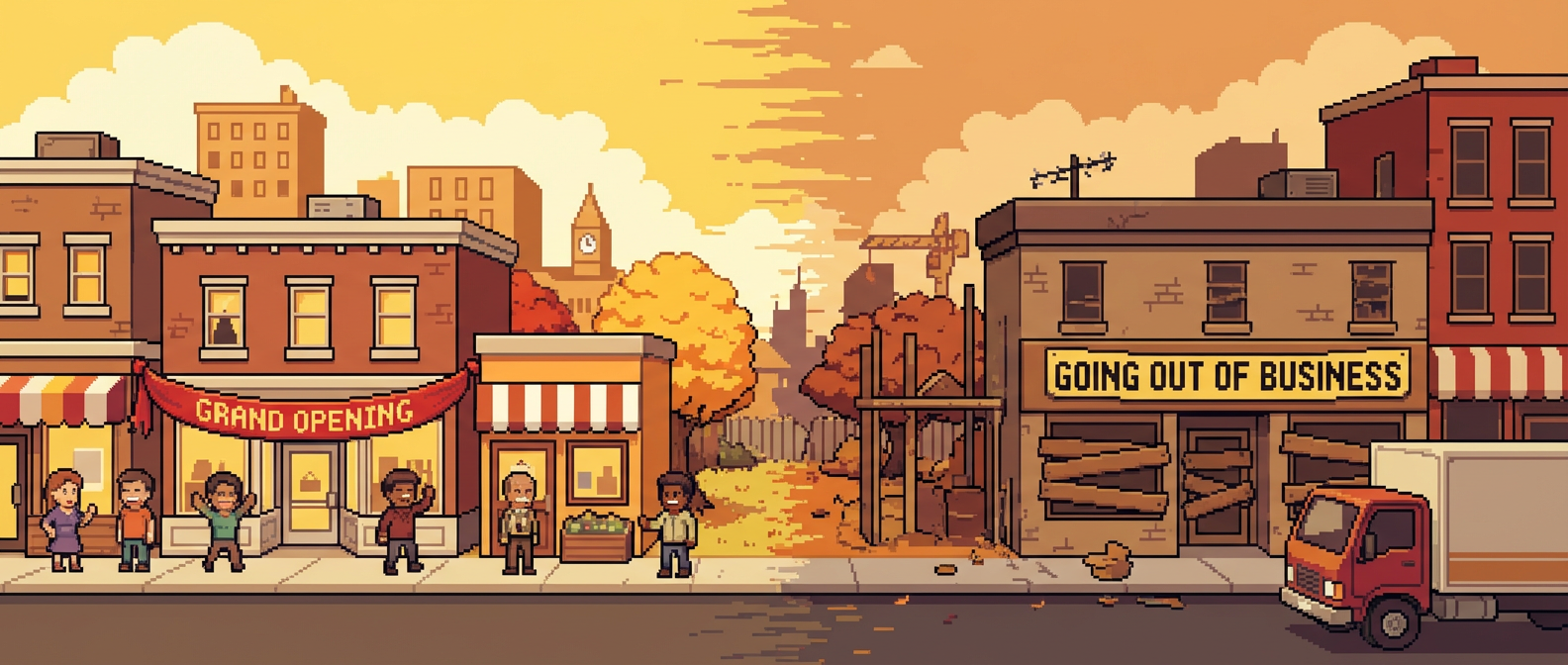
More than 2,500 local newspapers have shut down since 2005, leaving huge chunks of America without reliable local coverage. This isn’t just about business closures. It’s the collapse of a century-old information infrastructure that once connected communities to their governments, schools, and civic institutions.

The Death and Rebirth of Local News: How America's Information Ecosystem Is Adapting
The Death and Rebirth of Local News: How America’s Information Ecosystem Is Adapting

The numbers are brutal. Over 200 counties across the United States now exist as “news deserts,” areas with zero local journalism coverage. These information gaps create invisible but serious consequences. Town hall meetings go unmonitored. School board decisions escape scrutiny. Local corruption grows in darkness.

Traditional advertising revenue, the lifeblood of local newspapers for generations, has migrated almost entirely to digital platforms. Facebook and Google captured the lion’s share of advertising dollars that once supported hometown papers. A business model that worked for over a century collapsed in just two decades.

The Nonprofit Journalism Surge

Something new has emerged from the wreckage. Nonprofit journalism organizations now number over 300 across the United States, representing a fundamental shift in how local news gets funded and produced. These outlets operate under completely different economic pressures than their for-profit predecessors.

Nonprofit newsrooms rely on foundation grants, individual donations, and membership programs instead of advertising revenue. This funding structure lets them pursue investigative projects and cover underserved communities without the constant pressure of click-driven metrics. Organizations like Poynter media criticism have documented how these outlets often produce more substantive local coverage than their shrinking commercial counterparts.

But the nonprofit model has its own headaches. Fundraising eats up significant time and resources. Editorial independence becomes a delicate balance when major donors have strong opinions about coverage. Sustainability remains uncertain for many organizations operating on year-to-year grant cycles.

Big Tech’s Belated Investment

Technology companies, partly responsible for disrupting traditional media economics, have started investing in local journalism recovery efforts. Google’s News Initiative has committed more than $300 million to support local news organizations worldwide, with significant portions directed toward American newsrooms.

These investments take various forms. Direct grants to news organizations. Technology infrastructure support. Training programs for digital journalism skills. Revenue-sharing agreements that give publishers a larger cut of advertising dollars generated through their content.

Critics question whether these efforts represent genuine solutions or public relations moves designed to deflect regulatory pressure. The funding amounts, while substantial, pale compared to the advertising revenue that tech platforms extract from news content. Some journalism researchers argue that platforms profit more from news distribution than they contribute back to news production.

The Subscription Economy Experiment

Surviving news organizations have pivoted hard toward subscription-based revenue models. Reader payments now surpass advertising income at many successful local outlets. This shift fundamentally changes the relationship between news organizations and their audiences.

Subscription models encourage deeper community engagement. Publishers must provide genuine value to readers willing to pay for local coverage. This dynamic can improve journalism quality by prioritizing subscriber satisfaction over advertiser demands. Newsrooms focus on stories that matter most to their paying audience.

However, subscription barriers can limit news access for lower-income residents. Information inequality emerges when local news becomes a luxury good instead of a public resource. Some communities risk developing two-tiered information systems where paying subscribers receive comprehensive coverage while others rely on social media fragments.

Research from Nieman Lab journalism shows that successful subscription strategies require consistent, high-quality content that readers cannot find elsewhere. Local news organizations must demonstrate clear value propositions in increasingly competitive attention economies.

The AI Content Experiment

Artificial intelligence has entered local news production as both solution and concern. AI-generated content promises to fill coverage gaps in understaffed newsrooms. Automated systems can produce sports recaps, weather reports, and meeting summaries at scale and low cost.

Early experiments with AI local news raise serious questions about accuracy and community trust. Automated systems struggle with nuance, context, and local knowledge that human reporters develop through sustained community engagement. Machine-generated errors in local coverage can damage relationships that take years to build.

Some news organizations use AI as a reporting tool instead of content creator. Automated systems help journalists analyze public records, identify story trends, and manage routine tasks. This approach preserves human oversight while leveraging technological efficiency.

The integration of AI into local journalism reflects broader questions about automation’s role in information production. Communities must decide whether they prefer human-generated coverage with resource limitations or AI-assisted content with potential accuracy concerns.

The future of local news depends on finding sustainable models that meet community information needs while adapting to technological and economic realities. These experiments in funding, technology, and audience engagement will determine whether American communities can maintain the local journalism essential to democratic participation. What emerging models do you see succeeding in your own community?

Why Nobody Trusts the News Anymore—And What That Means for Democracy

The Numbers Don’t Lie

Trust in media has cratered. The latest global surveys reveal confidence in news organizations sitting at record lows across developed nations. This isn’t just another bad year for journalism. It shows how people relate to information has fundamentally changed.

Why Nobody Trusts the News Anymore—And What That Means for Democracy

The decline spans continents and cultures. From Europe to Asia to the Americas, audiences express deepening skepticism about traditional news sources. But the crisis runs deeper than simple dissatisfaction with coverage. People increasingly question whether objective reporting even exists.

What makes this collapse particularly alarming is its speed. Trust erosion that once took decades now happens in election cycles. Social media amplifies every perceived bias. Every editorial choice becomes evidence of agenda. Every correction feeds suspicion rather than building credibility.

The Polarization Problem

Political identity now determines media reality. Conservative audiences trust completely different outlets than liberal ones. The same news story gets polar opposite credibility ratings depending on who reports it. This isn’t about quality journalism anymore. It’s tribal loyalty, pure and simple.

Research reveals Americans consuming news from increasingly narrow ideological bubbles. Republicans and Democrats literally inhabit separate information ecosystems. They read different articles, watch different channels, and follow different social media accounts. Shared facts have become rare commodities.

This fragmentation creates a dangerous feedback loop. Outlets cater to their base audiences to survive economically. Partisan coverage drives away moderate readers. The remaining audience becomes more extreme. The cycle accelerates. Common ground disappears.

International observers watch this American experiment with alarm. Other democracies see similar patterns emerging in their own media landscapes. The polarization virus spreads through digital networks faster than any vaccine can contain it.

Fighting Lies After They Spread

Fact-checking organizations have multiplied dramatically over the past decade. Professional debunkers work around the clock to identify false claims and set records straight. These efforts are journalism at its most essential. They also reveal the brutal limitations of trying to chase misinformation after it’s already out there.

The problem isn’t identifying lies. Skilled researchers can trace false narratives to their origins and document their spread. The First Draft misinformation research shows sophisticated tracking methods now exist for monitoring information pollution in real time.

But reaching people already convinced by false information proves nearly impossible. Fact-checks rarely penetrate the communities most affected by misinformation. They often reinforce existing beliefs rather than changing minds. Here’s the kicker: correcting false information can paradoxically strengthen its hold on believers.

Social media platforms have tried warning labels on disputed content. Studies consistently show these interventions have minimal impact on user behavior. People scroll past warnings. They dismiss official corrections as censorship attempts. The labels sometimes increase sharing rather than reducing it.

Prevention Over Cure

Researchers are discovering that preventing misinformation works better than correcting it afterward. Psychological inoculation teaches people to recognize manipulation techniques before encountering them. This prebunking approach shows promising results in controlled studies.

The concept borrows from vaccine science. Exposing people to weakened versions of false arguments helps them develop resistance to stronger versions later. They learn to spot emotional manipulation, logical fallacies, and source credibility issues. The immunity builds over time.

Educational programs now teach media literacy in schools and communities. Students learn to trace sources, verify claims, and recognize bias. These skills transfer across subject areas and persist into adulthood. They create long-term resistance to information manipulation.

But scaling these programs remains challenging. Misinformation spreads faster than education can keep up. Bad actors adapt their tactics constantly. The Reuters Institute Digital News Report documents how quickly false narratives evolve to evade detection systems.

The AI Challenge

Artificial intelligence now generates convincing fake videos, audio recordings, and written content. These synthetic media creations challenge fundamental assumptions about evidence and verification. Newsrooms struggle to develop authentication protocols for this new reality.

Deepfake technology has democratized deception. Creating believable fake videos once required Hollywood-level resources. Now anyone with decent software can put words in politicians’ mouths or fabricate compromising footage. The barriers to sophisticated manipulation have essentially vanished.

Traditional verification methods became inadequate overnight. Checking sources and cross-referencing claims no longer works when the evidence itself can be artificially generated. Newsrooms need new technical expertise and expensive detection tools. Many lack resources for this arms race.

The implications extend beyond journalism into legal systems, political campaigns, and personal relationships. When any recording could be fake, how do societies determine truth? This question will define the next phase of the information age.

Building Back Better

Restoring media trust requires acknowledging that the old model is broken. Readers don’t simply want unbiased reporting anymore. They want transparency about how stories get made, who pays for coverage, and why certain topics receive attention. They demand accountability from the industry claiming to hold others accountable.

Some news organizations experiment with radical transparency. They publish their editorial processes, funding sources, and correction policies. They engage directly with critics rather than dismissing feedback. These approaches rebuild trust slowly but measurably.

The path forward means recognizing that trust gets earned through consistent behavior over time, not clever marketing campaigns or noble mission statements. It requires admitting mistakes, explaining methods, and proving value to skeptical audiences who have plenty of other entertainment options competing for their attention.

Tickercentral — News You Can Use

Tickercentral — News You Can Use

Straightforward news that actually matters to your day.

We stick to journalism fundamentals: check facts twice, cite real sources, include different viewpoints, and fix our mistakes fast. There’s enough noise out there already. We focus on clarity instead.

What you’ll find here: Top Stories · Politics · Business · Technology · World · Opinion

AI in Creative Arts: The Da Vinci Code of Tomorrow’s Creativity

Hey there tech explorers! If the idea of AI as the new Renaissance arouses either a skeptical brow raise or a gleeful fist pump, you’re in the right place. We’ve all heard stories of AI mastering complex strategies, like obliterating grandmasters in chess and Go. But now, it’s breaking into the realm of creativity, our sacred territory, adding its own brushstroke to canvases, melodies, and even the written word. Today, we’re looking at how AI isn’t just a useful assistant but a muse in the creative arts. Grab a cup of coffee, and let’s explore how our silicon-based buddies are redefining what it means to be creative.

The New Digital Paintbrush

Artificial Intelligence is showing off with digital artistry that’s more than just code-generated doodles. Programs like OpenAI’s DALL-E and Google’s DeepDream have changed how we think about and create art. DALL-E produces images from text descriptions in ways that often leave the AI’s human counterparts awe-struck, and perhaps a bit nervous.

AI art generators use complex algorithms and neural networks to analyze existing artworks, then create something completely new. Imagine telling a machine to paint you “a fluffy koala in a Van Gogh style,” and voilà, a masterpiece appears! This isn’t just Picasso meets Skynet. This is history meeting the future on a digital canvas at warp speed.

Yet, while some marvel at AI’s abilities, others question its authenticity. Is a piece of art created by an algorithm truly art, or just sophisticated mimicry? I think about this philosophical puzzle often and love that maybe, and perhaps ironically, the answer is whatever makes us feel most human.

The AI Symphony

From algorithmic compositions to AI-driven performances, music is another frontier where artists are finding a new creative partner. Tools like Sony’s Flow Machines and Google’s Magenta are pushing boundaries by crafting compositions that literally strike a chord with listeners.

For example, Sony’s AI composed a Beatles-esque rock tune back in 2016 called “Daddy’s Car.” And let me tell you, the first time you hear an AI-made song that could rock a festival stage, it’s a mix of awe and a touch of existential crisis. “Is this our new musician overlord?”

AI-generated music isn’t just about creating compositions, it’s about collaborating. Brian Eno, the legendary composer, once mentioned in his Oblique Strategies, “Use an old idea.” Ironically, AI does just that. It mashes up old ideas to make something that’s both new and nostalgically familiar. Musicians are discovering that AI can be their creative partner, offering suggestions and variations they might not have dreamed up alone.

AI in Storytelling: Plotting the Future

Storytelling has always been a deeply human act, yet AI has found its narrative voice. Natural Language Processing (NLP) combined with Generative Pre-trained Transformer (GPT) models, like OpenAI’s GPT-3, are powerful text generators that string together plots or dialogue coherent enough to rival any sleep-deprived novelist.

These technologies can do everything from drafting short stories to writing ad copy that’s more compelling than a late-night infomercial. The entire process is kind of like having an editor who never gets tired, never asks for a coffee break, and doesn’t binge-watch TV when it should be editing your manuscript.

Some argue these AI authors may lack the soul or gut understanding of the human condition that ink-and-paper scribes bring. Others, however, see AI as a toolkit for unlocking potential narratives, helping writers out of creative slumps or inspiring new approaches to their craft. Imagine Terry Pratchett and a sentient laptop working out a literary masterpiece together. Pure magic, right?

Challenges and Ethical Dilemmas

Even as we embrace this new era, there are important questions we need to wrestle with. One major concern is originality and copyright. When an AI “creates,” who owns that work? Is it the developers of the AI, the person who inputs the prompt, or the AI itself? It’s a bit of a legal mess, kind of like deciding which cat owns the couch. You can argue all day, but at the end of the day, it’s still covered in cat fur.

Moreover, there’s the constantly ticking ethical clock. What happens when machines start mirroring biases present in their training data? AI can either be a neutral tool or an amplifier of prejudices, depending on how we shape it. As we code the future of creativity, we need to do so with empathy and inclusivity in mind.

What’s Next? Speculating On The Future

With the creative possibilities nearly endless, I find myself dreaming (sometimes with a cocktail in hand) about the next phase of AI artistry. In the future, could we see AI directors co-creating films with auteurs, or AI choreographing dances unseen by human improvisation? Just imagine a Broadway play where an AI-generated composer works alongside Andrew Lloyd Webber, debuting a musical that feels both classical and cutting-edge.

The balance between technology and creativity is a delicate dance. But when handled well, AI in creative arts promises to be an energetic collaboration that enriches our cultural world. And that’s the beauty of it, who knows what will come next? In this digital renaissance, the canvas is wide open, and every keystroke or algorithmic flourish is just the beginning of an amazing story.

So, here’s to the trailblazers braving this bold new age, where art and technology walk hand in hand into a future that’s as exciting as it is unpredictable. Cheers to creativity, now and forever.

Review Your Credit Reports With an Experian Credit Works Review

Experian credit works gives you a free credit report once a year if you have an active credit account. You can get this report for any card, student loan, auto loan, or mortgage application. If you’re curious about saving money with this credit monitoring service, keep reading. Experian is one of the three main credit reporting agencies (along with Equifax and TransUnion) that determine your credit score. Equifax handles Experian credit reports, while the other two are separate reporting agencies. Each one provides slightly different services.

experian creditworks review

Credit reporting agencies must give you three credit reports every year by law. These reports include your Experian credit score, all the information from the three credit reports, and scores for your individual accounts. Each credit agency has its own policies and procedures for credit scoring and report delivery. They also have different rules about who can access their credit reports.

As you’d expect, Experian handles credit scoring. Experian isn’t connected to or dependent on the other credit bureaus. But they’re open to receiving and evaluating your credit reports from other companies. Basically, Experian can access credit reports from other agencies if they need them for credit scoring purposes. This works in your favor because it gives you more control over who sees your credit report with the other bureaus. It’s also good for Experian.

Experian offers numerous types of reports. The annual credit report has detailed information about your spending habits and financial history from the past year. You can view the same report for a four-month period from when you applied for credit to when you closed the account. This shows you how your credit activities and record change over time. You can learn more about your own credit by accessing your Experian credit reports and FICO scores online. You can also see how others have done with the same credit monitoring services by visiting credit monitoring websites.

When it comes to protecting your personal details, Experian says you’re protected at all times. They guarantee that all your data stays secure so that identity theft, fraud, and similar crimes can’t damage your credit reports and cause you problems. The Experian credit reports and FICO score online services do offer security. But there are certain things you should watch out for. If you become a victim of identity theft, contact the authorities right away.

The main advantage of using the Experian credit works report and FICO score online service is how easy it is to access this information. It’s as simple as logging onto the website, entering your information, and getting a copy of your report almost instantly. You don’t have to fax any documents or worry about sending anything over the phone. This lets you review your reports anytime and from wherever you want. This is especially helpful for people who usually get their reports through the mail.

However, there’s a way to get one-time credit reports and a detailed analysis at no charge. You can request your free credit reporting once a year from the three main credit reporting bureaus (Experian, Equifax and TransUnion) for as little as $15 each time. The one-time fee doesn’t provide the same level of identity protection as the one-time credit reports and FICO score online service does though.

To get the most out of your monthly free credit reports, make sure to check the information you’re reviewing with one of the Experian credit reports and FICO score online services. This will give you the most accurate analysis and information about your credit history. If you find errors or other inconsistencies with your FICO scores, you need to dispute them with the credit reporting agencies. If you discover that your bank account numbers don’t match your Social Security numbers, contact the bank immediately. This way, you can keep your personal and financial data safe and secure. Identity theft has been one of the major causes of bankruptcy in the United States, and with easy access to bank accounts and credit cards over the internet, identity theft is increasing.