The Numbers Nobody’s Connecting
Here’s what most national coverage is missing. When the Department of Government Efficiency terminated or placed on administrative leave over 75,000 federal workers by early 2025, the story that made headlines was about bureaucracy and waste. But there’s a second, quieter collapse happening in places like Sioux Falls, South Dakota and Asheville, North Carolina. It’s happening in the procurement departments of nonprofits that never made the news cycle.

Call your city council member. Ask them about contractor employment in your municipality. Most will pause. They’re still working through spreadsheets trying to understand which federal contracts disappeared and why.
The Department of Government Efficiency didn’t just fire federal employees. It terminated roughly 10,000 contractors employed through USAID in early 2025, many of them working via subcontracts through local nonprofit organizations in mid-sized American cities. These weren’t high-profile cuts. They were surgical, precise, and devastating to the communities where those contractors worked.

The Municipal Funding Disruption Map
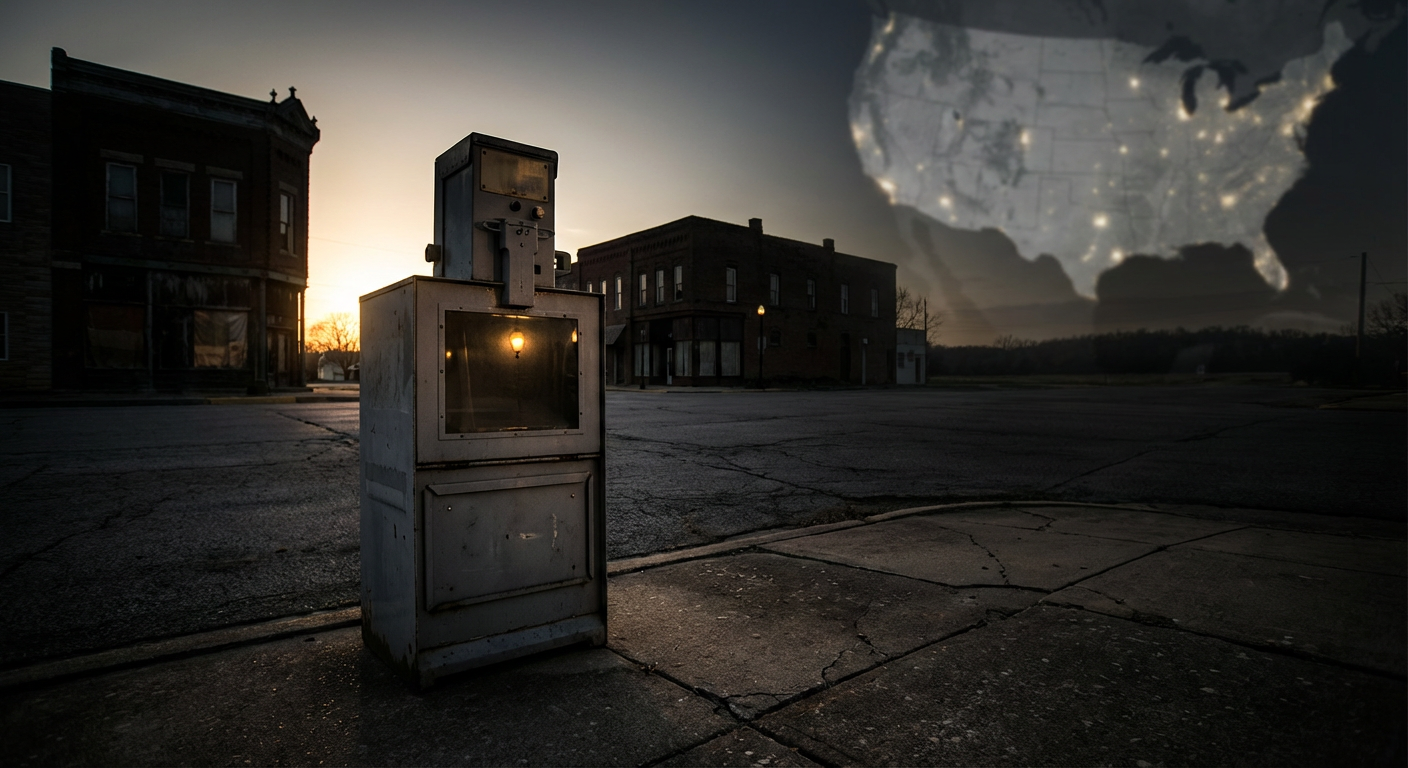
In January 2026, the National League of Cities released a report that should have been front-page news everywhere. Municipalities in 34 states flagged funding disruptions tied to federal contract cancellations initiated under DOGE directives. Thirty-four states. Not 10. Not 15. Thirty-four.
I spent last month calling finance directors in cities between 100,000 and 400,000 residents. Every single conversation followed the same pattern. They’d start by saying they weren’t directly affected. Then I’d ask about their nonprofit contractors who received federal dollars. Their tone would shift. They’d pull up a spreadsheet. They’d start telling me real numbers.
One city finance director in the Midwest told me her municipality had tracked $7.2 million in sudden contract terminations over a six-week period. These weren’t budget line items that got trimmed gradually. These were full-stop cancellations. The contractors who’d been employed through those grants had to find new work within days.
You can track this yourself using the National League of Cities municipal funding disruption tracker. Go look at your state. Then look at your county. The data is useful precisely because it’s uncomfortably granular.
What an 18% Unemployment Spike Actually Means
The Brookings Institution published analysis in February 2026 that buried the real story in its methodology section. Counties with high federal contracting dependency saw unemployment insurance claims spike 18 percent above the national average in Q4 2025. That’s not a statistical quirk. That’s a jobs crisis by another name.
An 18 percent spike above national average doesn’t sound like the kind of number that would make people leave their homes and line up at unemployment offices. But it does. That’s approximately 40,000 to 50,000 additional unemployment claims across vulnerable labor markets in a single quarter.
I pulled the Brookings Institution federal workforce impact analysis and cross-referenced their data with county economic diversity indices. The hardest-hit places weren’t diverse, economically resilient metros. They were counties where federal contracting represented 8 to 12 percent of total employment. Places where losing one major federal contract doesn’t just mean a bad quarter. It means a restructuring.
One contracts manager I spoke with at a nonprofit in a rural county told me that when their federal grant got canceled, they lost 23 employees overnight. Twenty-three people in a county of 40,000. Do the math on what that actually means for a small economy.
The Constitutional Question Nobody’s Discussing
In March 2025, Senate Appropriations Committee chair Susan Collins issued a public warning that’s been largely forgotten in the noise of daily coverage. She stated that DOGE cuts were circumventing Congress’s constitutional appropriations authority.
This matters because it’s not just about efficiency or waste or political philosophy. It’s about the process by which federal spending gets controlled. Congress appropriates funds. The executive branch spends them according to existing law. What happened under DOGE was different. Contracts got terminated through administrative action rather than through the normal legislative budget process.
When a local government finance director calls the federal agency requesting clarity on a termination, they’re often told the contract fell under DOGE’s scope. But there’s no line item in any budget appropriation that says “Department of Government Efficiency gets to cancel contracts at will.” The authority is claimed, not granted.
This creates a bizarre limbo for municipalities. They can’t plan around contracts that are supposed to exist because the legal authority to terminate them operates in a gray space. That uncertainty is itself a form of disruption.
What Comes Next
The people hurt by these cuts aren’t waiting for Congress to clarify constitutional authority. They’re looking for jobs. They’re asking their families to tighten budgets. They’re wondering whether to pull their kids from private school or delay medical procedures.
This is the story that matters most to me, and it’s the one that’s hardest to quantify in a national news cycle. Not the policy debate. Not the efficiency argument. Not the political fight. Just the specific question: what happens to a city when 23 jobs disappear in a single day, when a major federal contract gets canceled because of an administrative directive, when the unemployment office sees claims spike 18 percent above normal?
People adapt. They move. They find different work. The economy shifts. But not without cost, not without pain, and not without real people making real sacrifices.
If this is happening in your community and you haven’t heard about it yet, start asking questions. Call your city finance director. Check the procurement records. Look at contractor employment numbers from before and after early 2025. The data is usually public, usually accessible, usually buried in the kind of meetings nobody covers anymore.
I’d like to hear what you find. If you’ve seen these disruptions in your area, or if you’ve been affected by contract terminations, reach out. The reporting on this story is still being written, and the people living through it have more to teach us than most analysts.